Carbine qualification
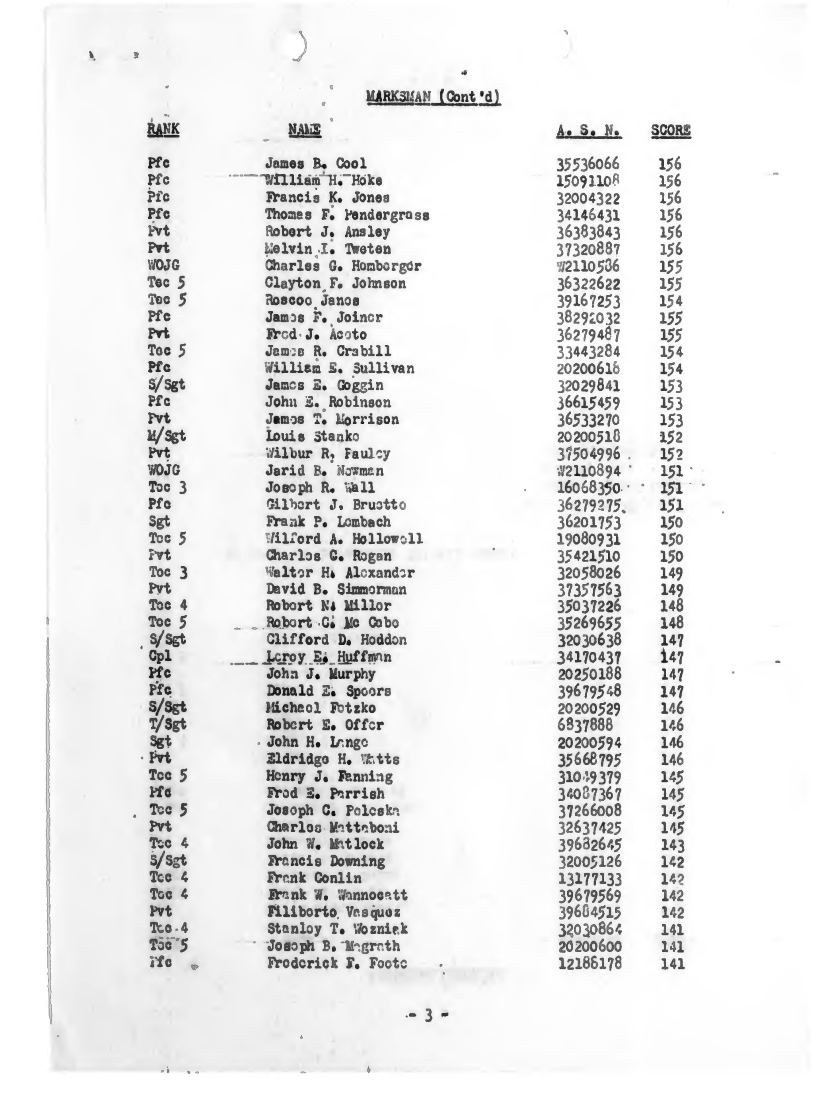
An original Headquarters Special Troops order records Frank Conlin, T/4, among the 27th Signal Company's marksmen. An earlier page of the same order also identifies Floyd Green.
The records / 27th Signal Company
Original Army records tell the story of a signalman crossing the Pacific, serving a division at war, and finally entering the long process of coming home. Open the documents, see the names, and read the history around each page.

The full story / Philadelphia to the Pacific and back
Frank's wartime biography follows the 27th Division through Hawaiʻi, Makin, Saipan, Espiritu Santo, Okinawa and occupied Japan. It introduces the radio operators, switchboard builders, officers and other soldiers found in his company’s papers—and embeds the original orders and rosters at the moments they enter the story.
Read Frank's complete Pacific narrative ↗A company across the Pacific
The 27th Signal Company maintained the division's communication systems across successive campaigns. The documents below combine named records for Frank with field journals and reports describing what the company had to do.
The route reflects 27th Division and Signal Company records. Frank is named individually in multiple unit and campaign documents; the route is not a claim that his exact vessel, flight or location on every day has been established.
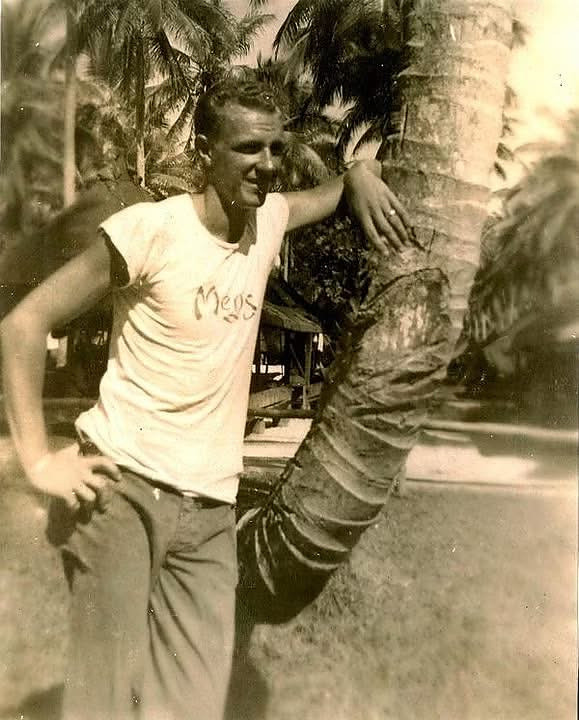
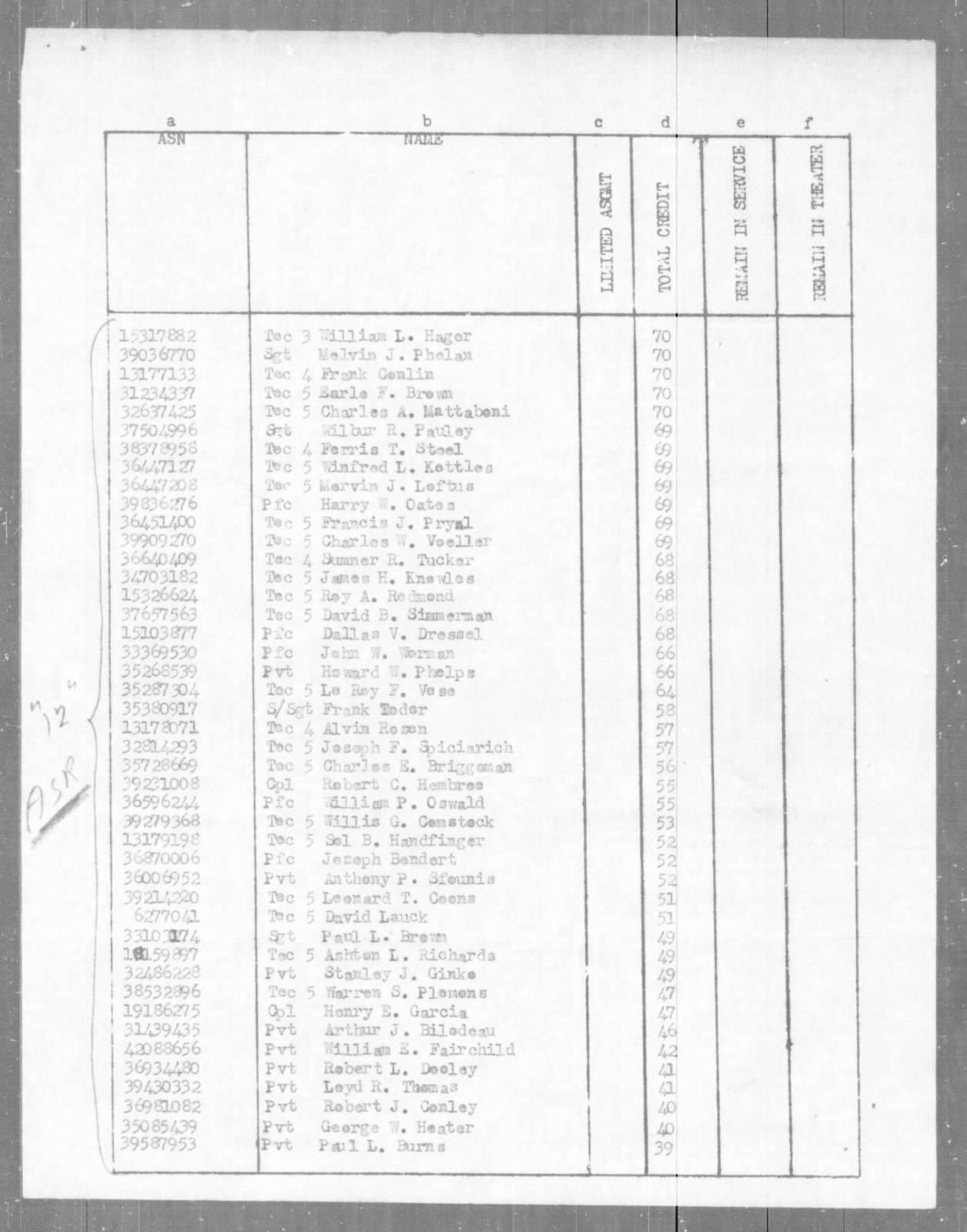
In September 1945, Frank had 70 points. The Army's enlisted threshold was 80. On October 1, that threshold fell to 70. Later that month, his name appeared on the transfer orders.
Read the chapter “Seventy Points” ↗The reading room / Thirteen original pages in document-date order
Open each entry to examine a web-sized image of the original document. Where a short multi-page PDF is available, it appears alongside the image. These are selected exhibits; the complete, unaltered archival reels are preserved separately.
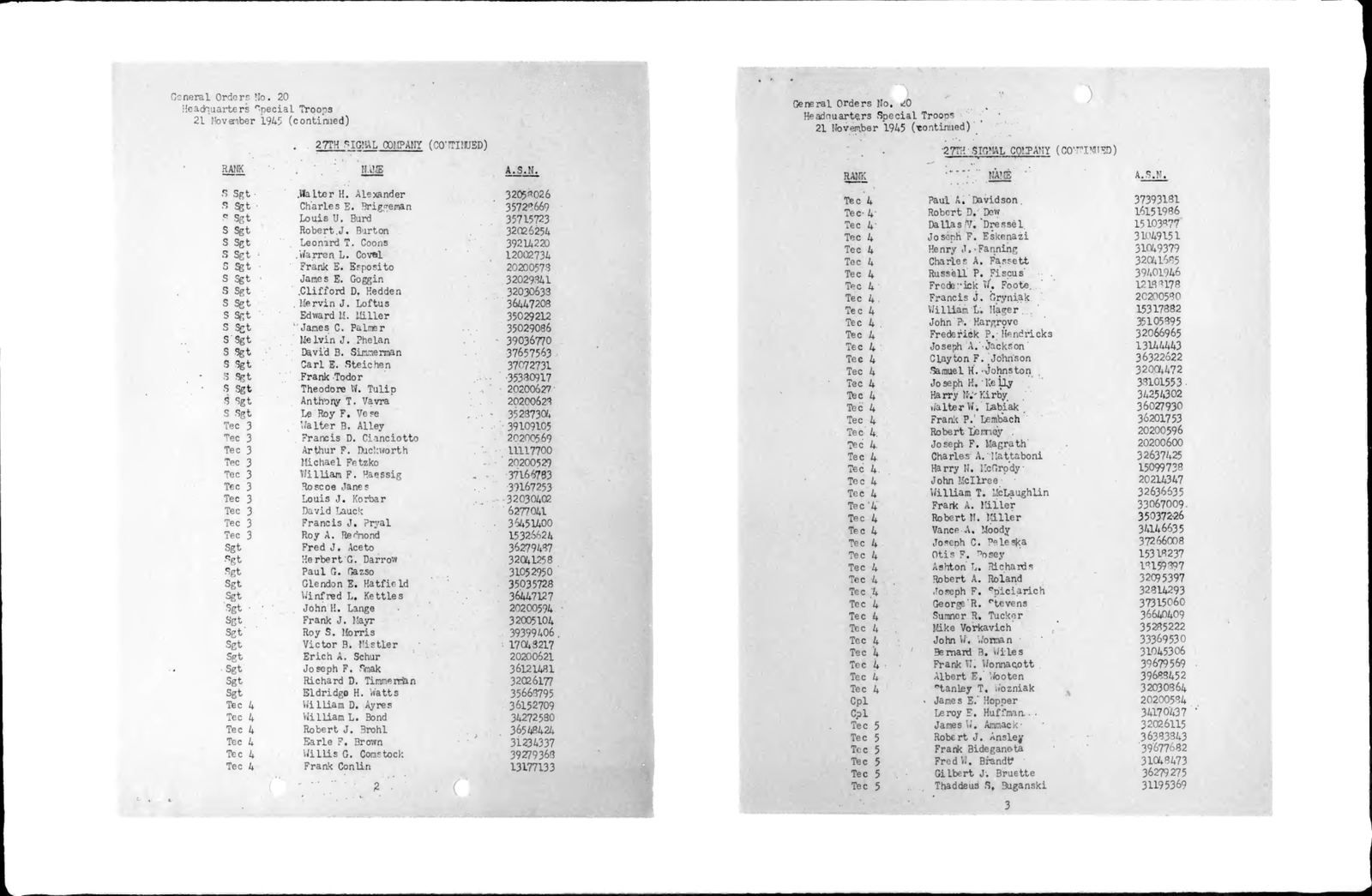
An original Headquarters Special Troops order records Frank Conlin, T/4, among the 27th Signal Company's marksmen. An earlier page of the same order also identifies Floyd Green.
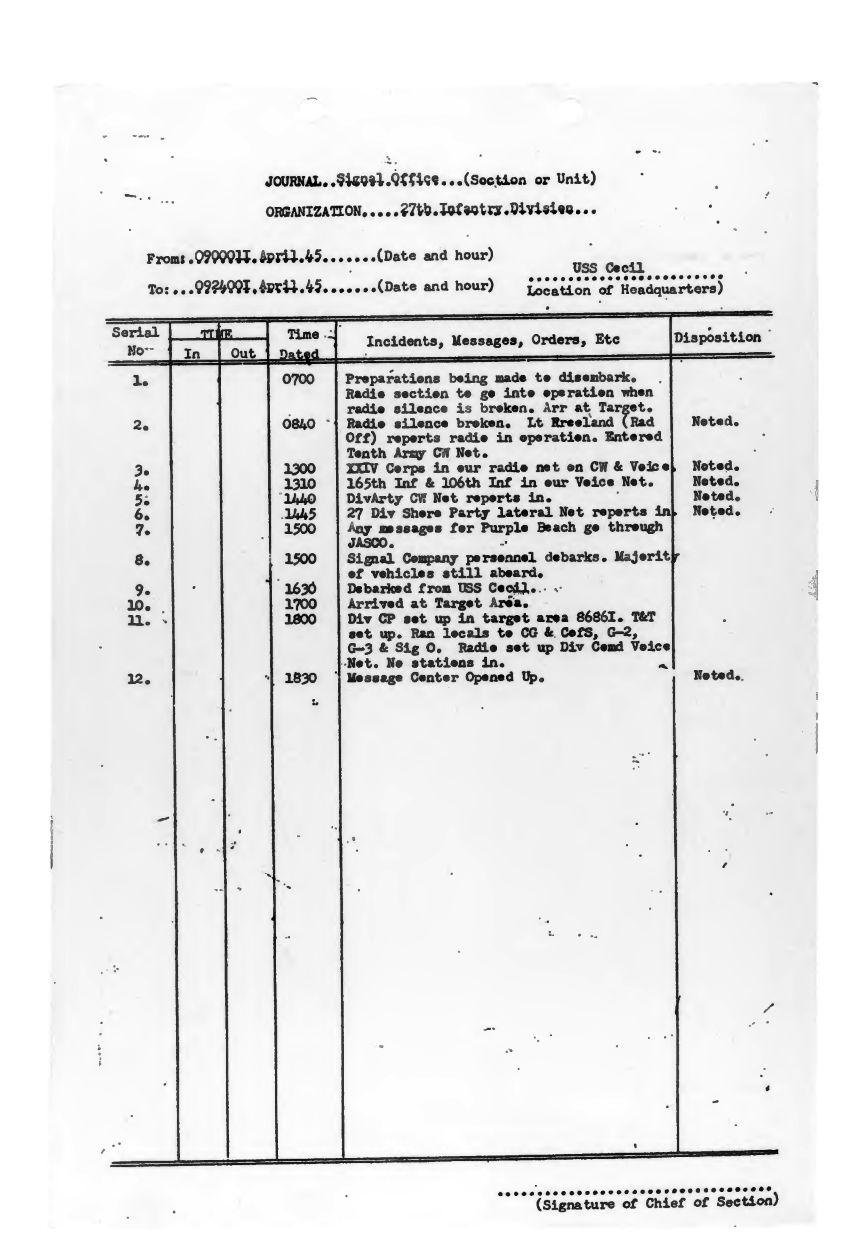
The division's Signal Office journal records radio arrangements as the 27th Division came ashore on Okinawa. The page documents the company's operating environment, not Frank's specific radio shift.
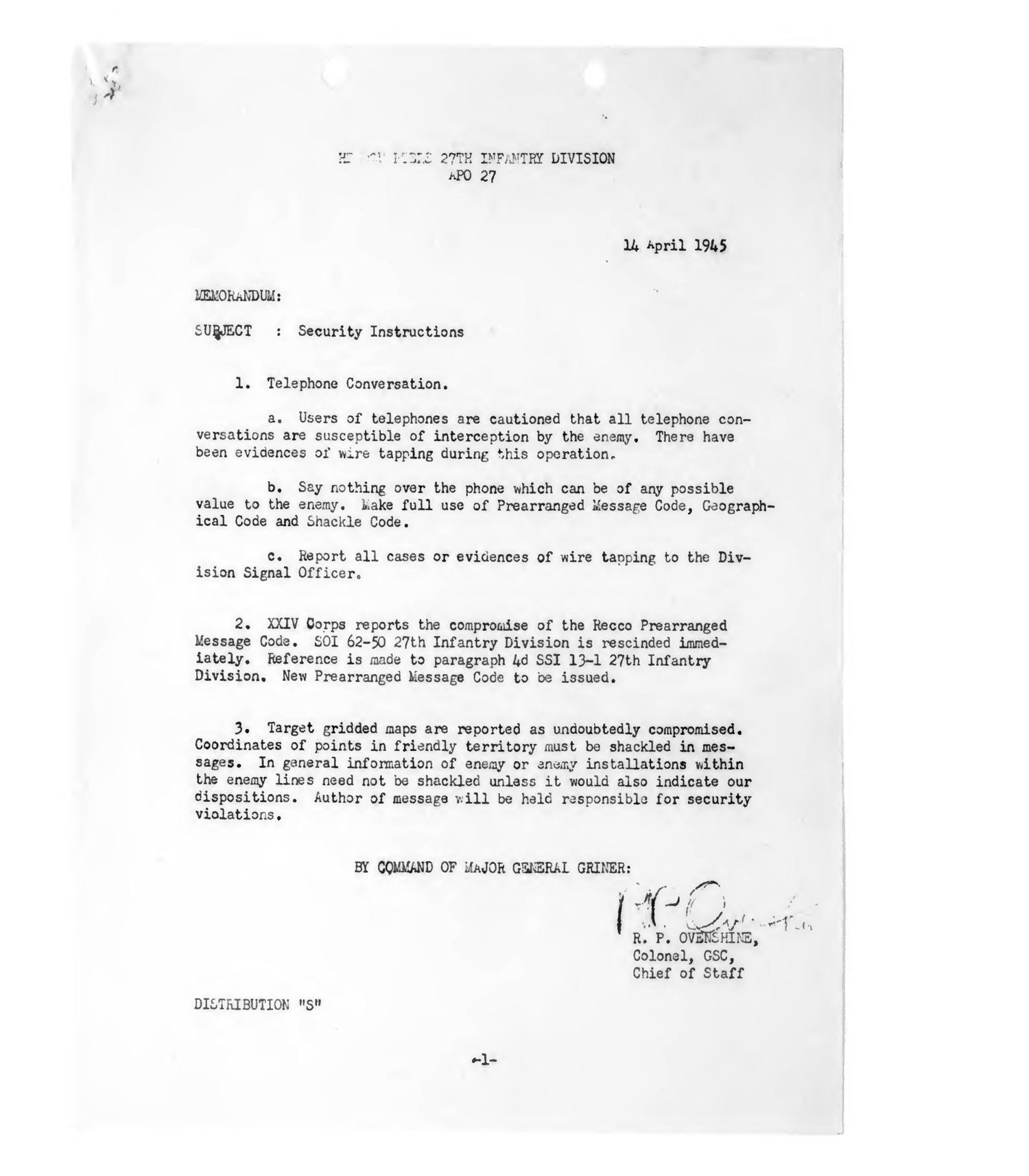
Colonel R. P. Ovenshine warns the entire division of evidence of Japanese wiretapping. A message code and gridded maps are already compromised. Communications security had become a battlefield danger.

Original Headquarters 27th Infantry Division Security Instructions memorandum, April 14, 1945, Signal Office journal reel 0273_27-ID-04-07.pdf, NARA RG 407, PDF page 150.
Enlarge the original page ↗ · Read the historical narrative ↗
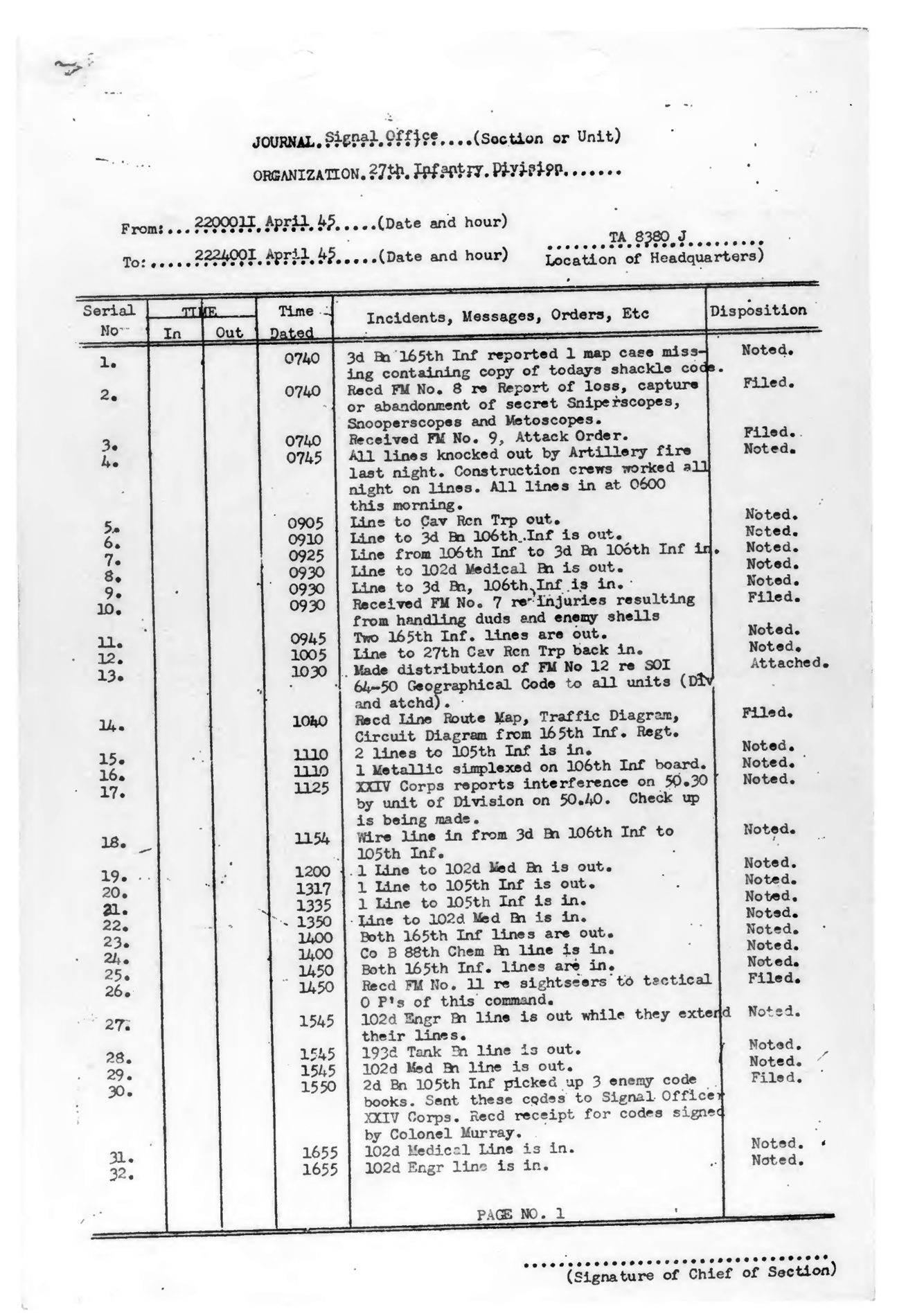
The Signal Office's 7:45 a.m. entry reports artillery-destroyed lines, repair crews working through the night, and connections restored at 6:00 a.m. The remaining entries show circuits failing and recovering throughout the day.

Original 27th Infantry Division Signal Office journal, April 22, 1945, 0745 entry, same NARA reel PDF page 162; rotated for reading.
Enlarge the original page ↗ · Read the historical narrative ↗
The 27th Signal Company’s campaign-credit roster names Frank Conlin, Technician Fourth Grade, by his exact Army number. The list also includes several men whose names recur in later orders.
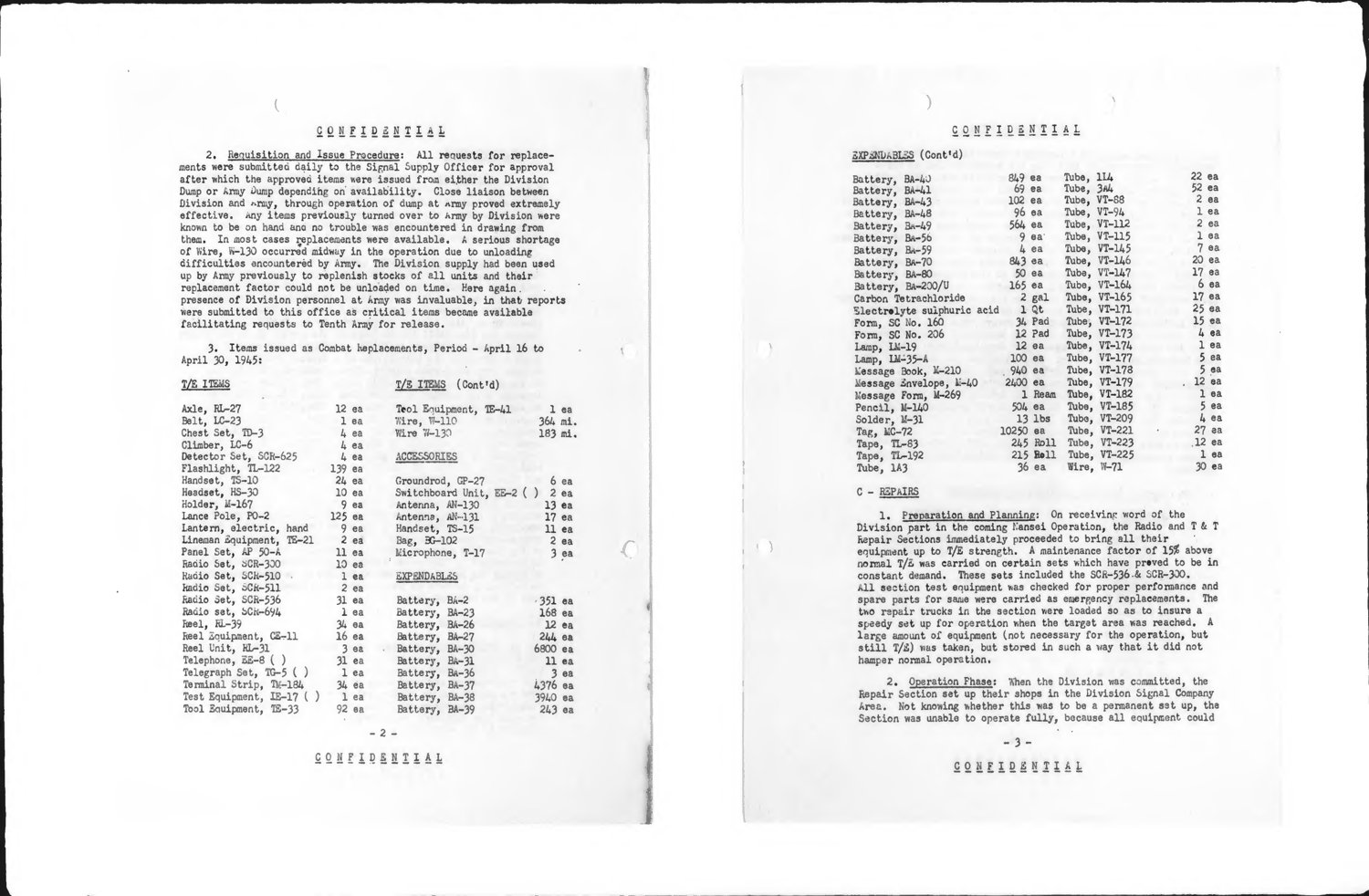
An original Signal Supply and Repairs report describes the radio sets, repair labor, batteries and replacements behind a working communications network during the Okinawa campaign.
On the 27th Signal Company enlisted roster, Frank has an adjusted-service score of 70. The same page identifies Howard Phelps; Floyd Green appears on the adjoining roster page.
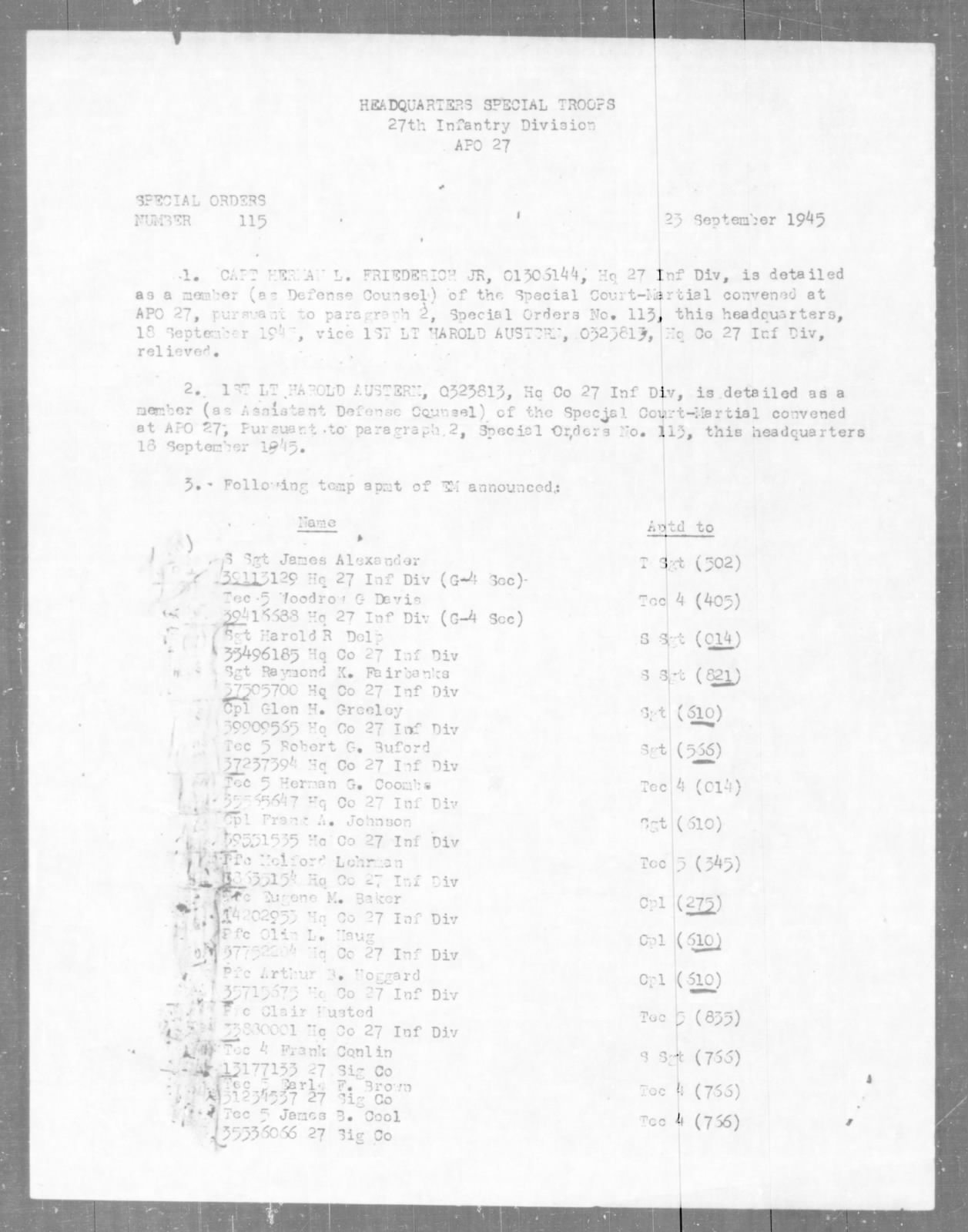
Special Orders No. 115 lists Frank among the company’s temporary appointments, giving him Staff Sergeant rank and MOS 766, high-speed manual radio operator.
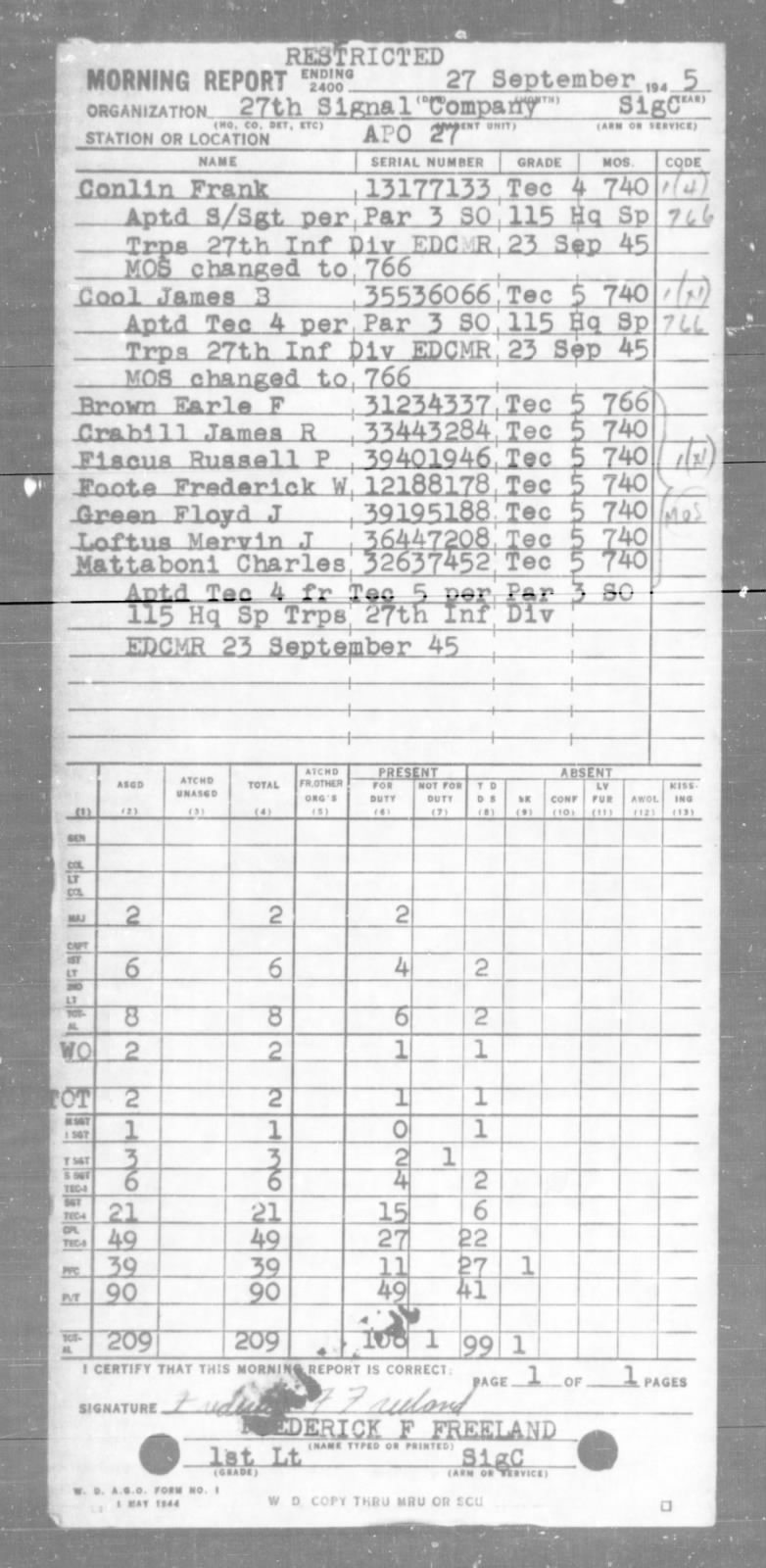
The company morning report records Frank’s MOS changing from intermediate-speed radio operation (740) to high-speed manual radio operation (766). Another soldier, James B. Cool, appears in the same report.
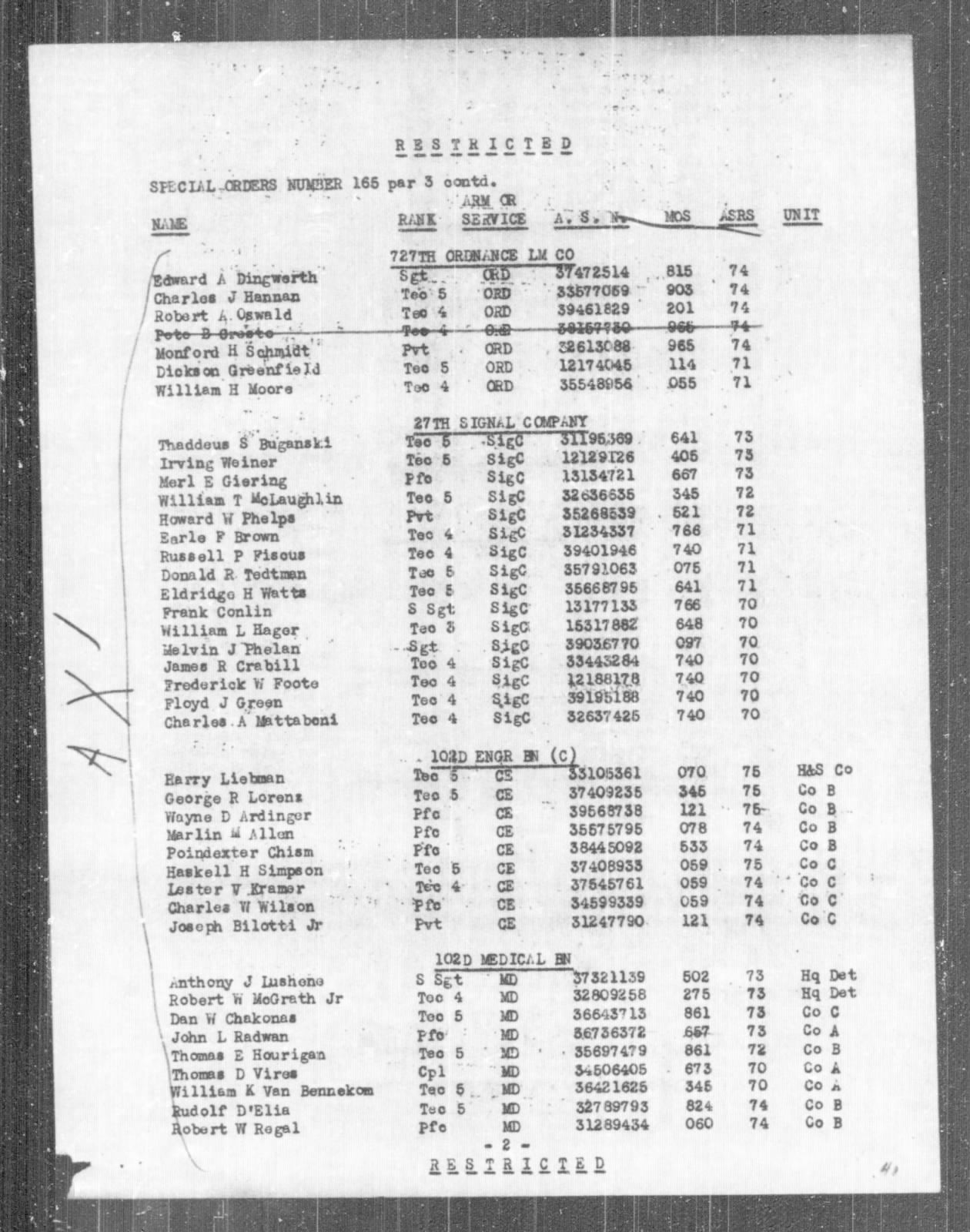
Special Orders No. 165 names Frank, Phelps, Green and thirteen other 27th Signal Company soldiers for transfer to the 4th Replacement Depot, effective October 25.
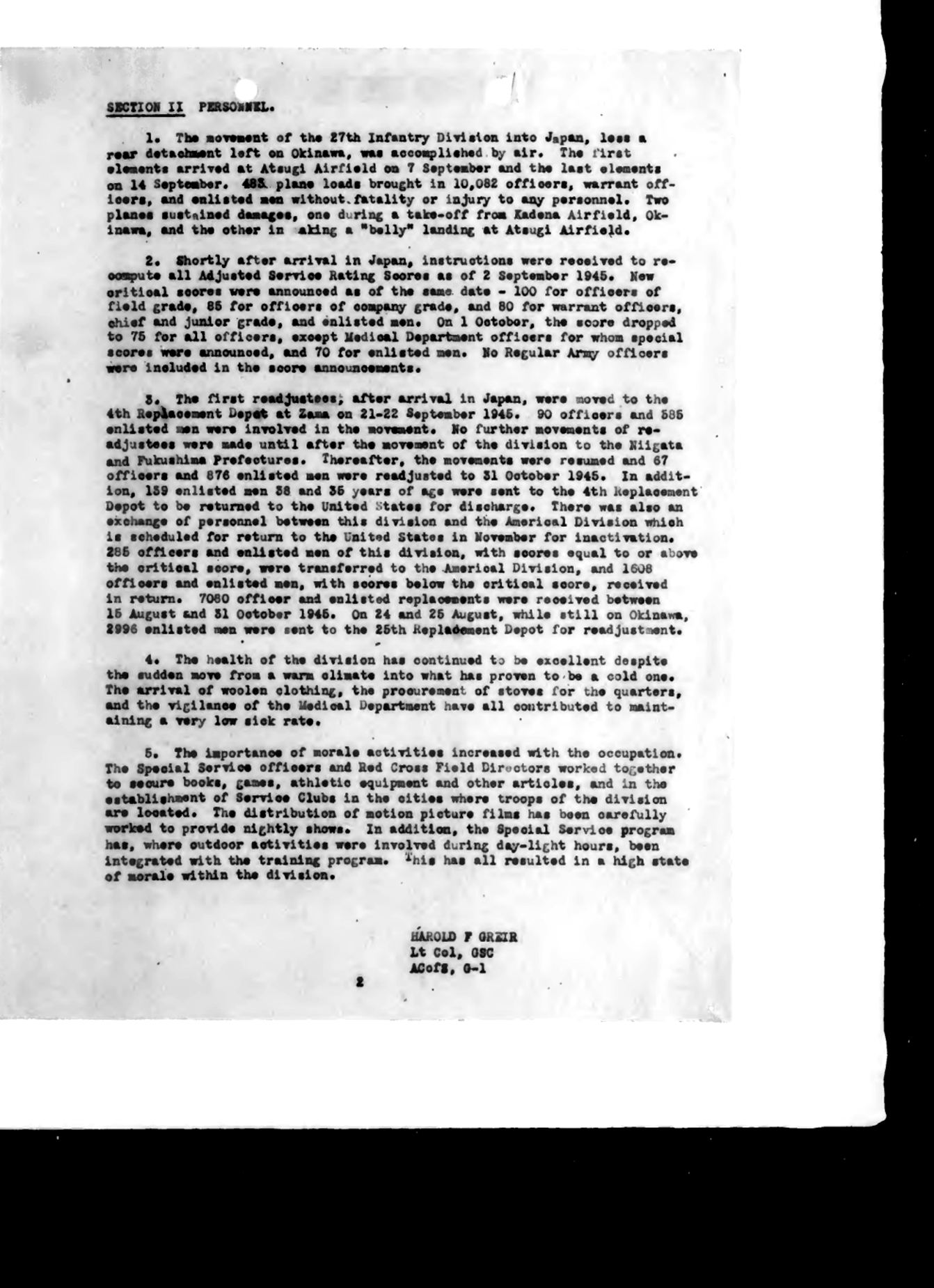
The G-1 occupation report explains that the enlisted release threshold announced September 2 was 80 points and that on October 1 it was reduced to 70. The rule change made Frank eligible under that score threshold.

27th Infantry Division G-1 Narrative Report, 19 November 1945, NARA RG 407, NAID 403935692; reel 27-ID-01-05, PDF page 89.
Open web-size scan ↗ · Read selected-page PDF ↗ · NARA catalog ↗
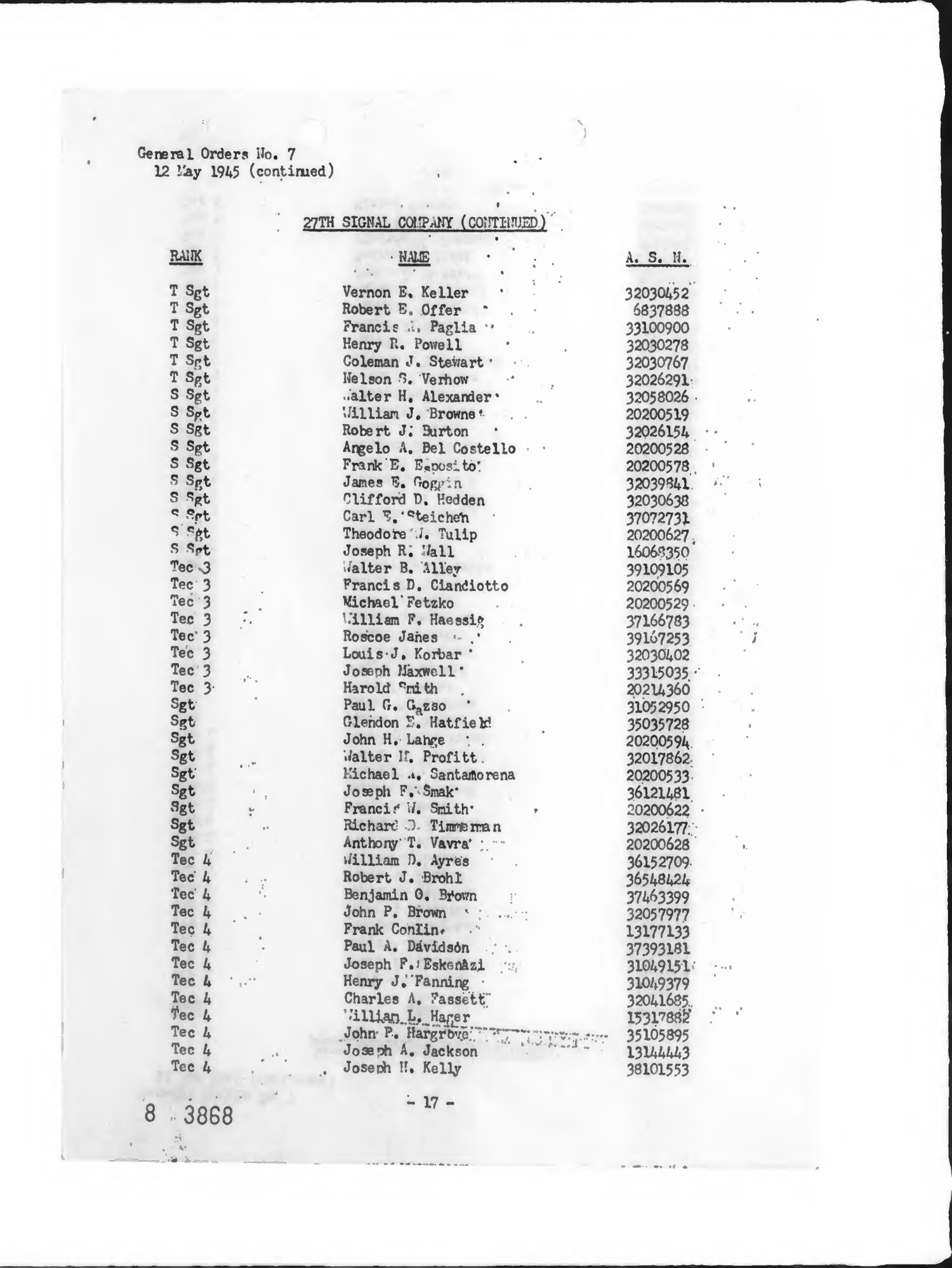
A retrospective general order lists Frank Conlin by his exact Army service number among 27th Signal Company soldiers credited for the Ryukyus campaign, March 26–July 2, 1945.
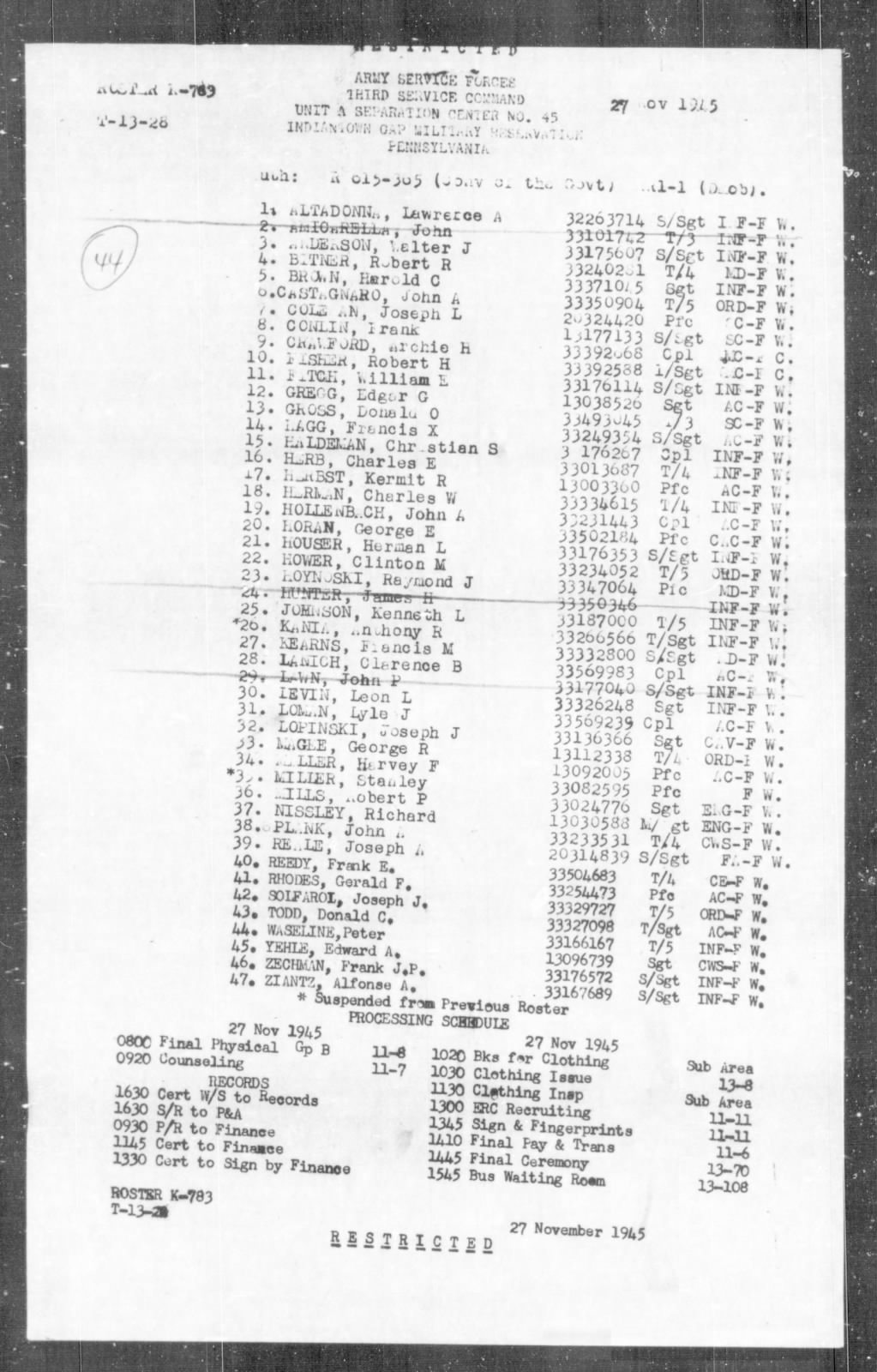
An Indiantown Gap separation-center processing roster identifies Frank in the United States, a remarkable endpoint after the company’s island campaigns.
More from the files
Short PDFs preserve a little more context around an individual page without making you download the entire archival reel. The originals used to produce them are retained in our research collection.
Provenance: U.S. National Archives Record Group 407, chiefly NARA NAIDs 404013052 and 403935692, with relevant unit orders and Signal Office journals; the two 1945 individual rosters and transfer order are user-supplied original Fold3 reproductions. The public images were resized or reoriented for legibility. We have not altered the underlying archival originals. Service numbers are reproduced where already present in historical documents.
Continue the story
Frank's military record is only one part of his life. His full biography follows him from Philadelphia through marriage, family, his working years and the memories that survived.