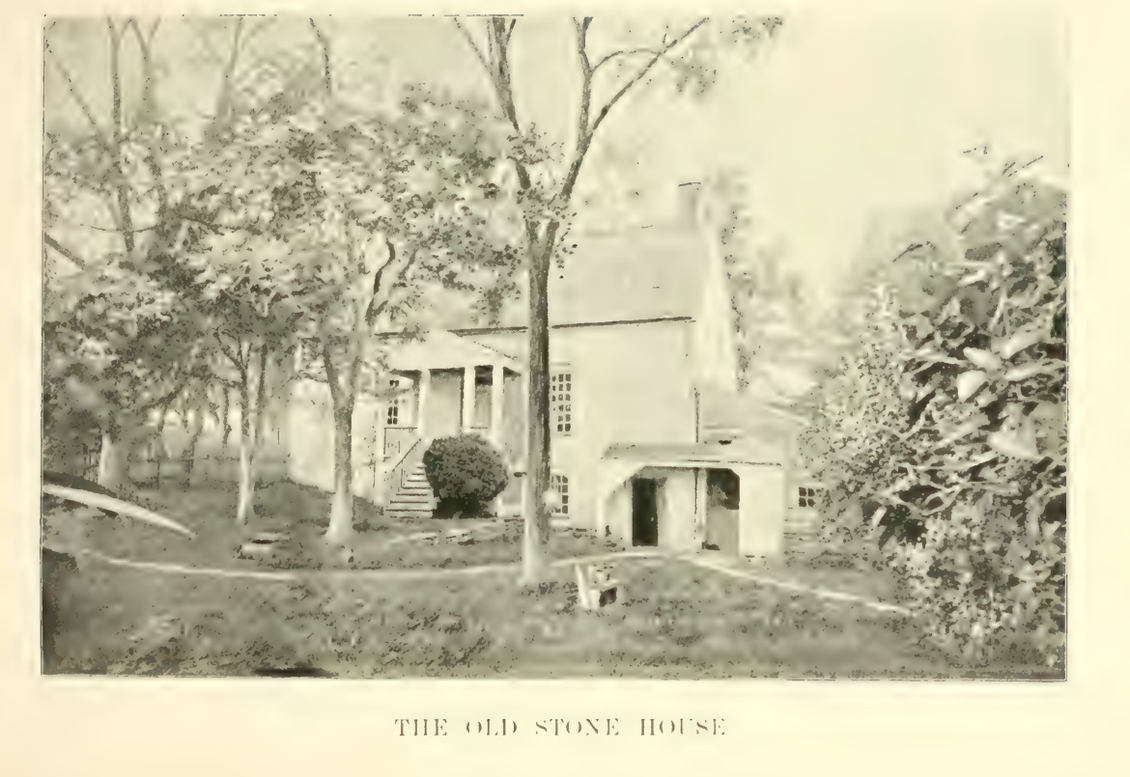
In 1751, Johannes Moelich purchased 367 acres in Bedminster Township. The following year, a stone farmhouse rose on the hillside. Generations later, a descendant named Andrew D. Mellick Jr. would devote an entire book to that place and the people who had lived in and around it.
Johannes had arrived in America in 1735, seven years after his relative Johann Peter. Their families followed related but distinct paths. Donald Melick's line runs through Johann Peter and his son Tunis, whose gristmills lay in Hunterdon County. The Bedminster house belonged to the other branch; it should not be mistaken for the dairy farm where Don grew up almost two centuries later.
The first shelter
The old history describes clearing woodland, raising a temporary log dwelling and preparing stone and timber for something more permanent. Its author openly imagines the sound of axes, neighbors coming to help and a meal eaten after the raising. Those scenes are literary reconstructions, not a diary written by the builders.
The property purchase is more firmly documented. In the author's account, Johannes paid £754 for the land, part in cash and part in bonds. He said he still possessed the discharged bonds, complete with Johannes's signature. That detail brings the otherwise distant transaction surprisingly close.
The mason—and the cost of passage
For the stone building, family tradition named Caspar Berger, a German mason who had arrived in the colonies in 1744. Berger had been contracted into service to pay the cost of crossing the Atlantic, a form of bound labor often called redemptioner or indentured service. The account says he earned his freedom by building stone houses, one of them associated with the Moelich homestead.
The stone walls are impressive, but the human circumstances behind them deserve attention too. A passage to America could leave a skilled worker dependent on years of compulsory labor, and the freedoms of colonial society were profoundly unequal.
Mariah Katrina and the windows
The book preserves two memorable household traditions about Johannes's wife, Mariah Katrina. In one, she carried mortar balanced on her head to the masons. In another, she objected to so many windows—although, to a later visitor, the windows looked remarkably small and few.
Mellick was candid that the mortar story might be a family fable. It is best enjoyed in that spirit: not proof that a particular gesture happened on a particular day, but a glimpse of how descendants remembered a capable woman at the center of the house's construction.
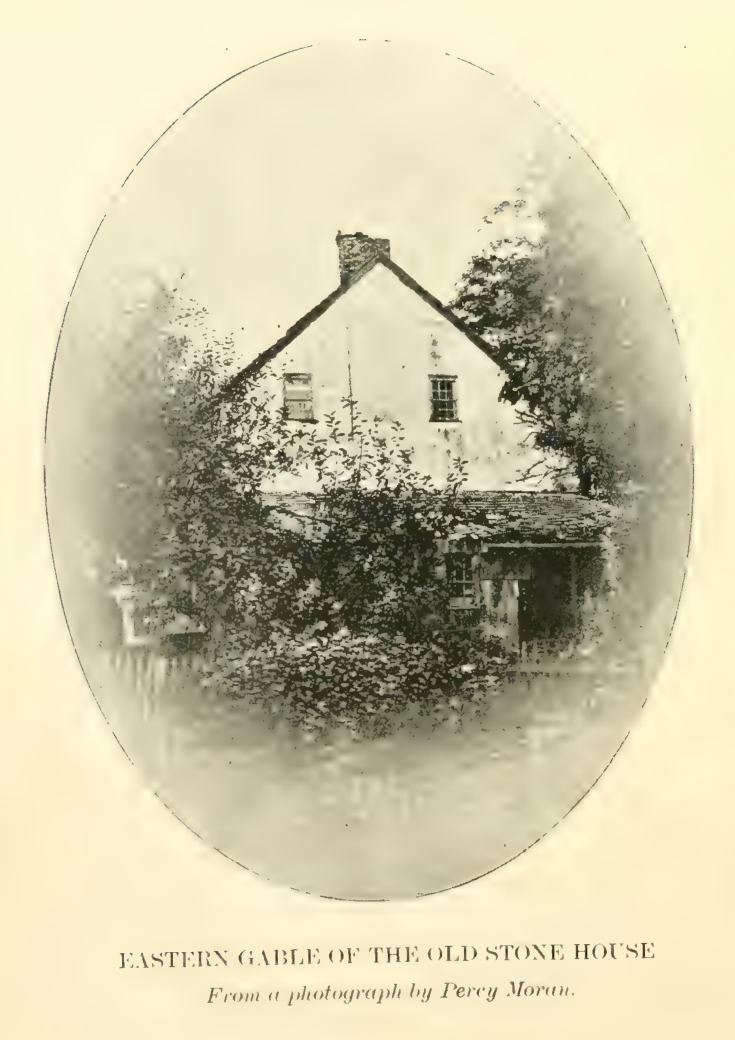
The completed home had thick stone walls, exposed timbers, a broad fireplace, Dutch doors and an austere simplicity that the author admired. His volume opens with a photograph of its eastern gable, taken long after the builders had died.
Which part belongs to Don?
For our family history, this is a story of kinship rather than direct inheritance. The stone house explains why one branch of the Moelich family became so well documented. The evidence inside its author's genealogical appendix is equally valuable for the different branch that leads from Johann Peter to Tunis and, eventually, to Don.
One house became a book. That book, in turn, preserved more than one family line.
Sources & traditions
- Andrew D. Mellick Jr., The Story of an Old Farm (1889), printed pp. 143–154: land purchase, bonds, house building, Caspar Berger and Mariah Katrina traditions; image of the eastern gable in the preliminary illustrations. Library of Congress scan ↗.
- Mellick's genealogical appendix, printed p. 682, documents the separate Johann Peter branch leading to Tunis. The family story about Mariah carrying mortar is explicitly described by its author as a tradition, not a verified eyewitness fact.
- Both house photographs were extracted directly from the supplied 1889 book scan; the eastern-gable frontispiece is credited to Percy Moran. Their exact photographic dates are not stated. Cropping and orientation have been adjusted for display; the historical images have not been reconstructed or artificially recolored.