South Bethlehem / 1917
Freight handler.
Railroad work kept William connected to South Bethlehem as his young family grew.
Our Family / Pennsylvania / 1936–2020
A life built
close to home.
By the time Dale was born in 1936, his family had lived in Pennsylvania for generations. Farmers, makers, railroad workers and factory employees helped shape the Lehigh Valley he called home. This is their story—and the story of the youngest of ten children who built a life there with Nancy.
Begin his story ↓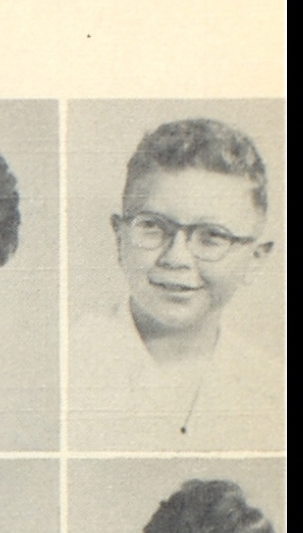
Macungie · Lehigh County
Dale C. Ritter was born on June 1, 1936, in Macungie, Pennsylvania, the youngest child of William Henry Ritter and Mary Ann (Bilger) Ritter.
His family had been growing for more than twenty years. Grace, the eldest, was already twenty-one when he arrived. Joel Norman, born in December 1932, was Dale's closest sibling in age. In a household of ten children, brothers and sisters could belong to distinctly different generations of experience, even while sharing the same parents.
William and Mary Ann had raised children through the First World War and the Depression. Older children were beginning working lives and families of their own while Dale was still small. By the time of the 1940 census, the Ritter household was in Allentown, one of the towns that would remain central to the family's story.
For Dale, Pennsylvania was home from the beginning. But the history behind that home reached much farther back—to German-speaking Europe, to colonial communities, and through the changing occupations and households of the Lehigh Valley.
Follow the generations before Dale ↓Ritter · Ruyter · Bilger
Nancy's family crossed the Atlantic in relatively recent generations. Dale's European roots lead much farther back, to eighteenth-century German-speaking communities and to families who were living in Pennsylvania before the United States was founded.
Two of Dale's family lines reach back into the German-speaking lands of eighteenth-century Europe. They were not a single family traveling together. The Ritter and Bilger branches followed separate paths through the records before meeting in later Pennsylvania generations.
On Dale's father's side, the oldest generations lead toward the German-speaking Palatinate and families established in colonial Pennsylvania. Heinrich (Henry) Ritter appears in eighteenth-century Pennsylvania family accounts, followed by his son Martin Ritter. The names and places connect this branch to an earlier American world, when familiar surnames could acquire different spellings as records passed between languages.
A history-making tavern. In 1799, a crowd met at Martin Ritter's Salisbury Township tavern and set out to release federal prisoners in Bethlehem. The building later became known as the Commix Hotel. Martin was identified as a township tax collector; there is no established evidence that he personally joined the march. Read the story of Ritter's tavern and Fries's Rebellion ↗
In colonial Pennsylvania, German-speaking families established farms, workshops and congregations in towns and valleys that were still taking shape. Across the generations, the Ritter family became part of that landscape, as familiar names and places were passed from one household to the next.
On Dale's mother's side, another line reaches Johann Ludwig Bilger, born around 1730 in Sigmarswangen, now part of Baden-Württemberg. Later Bilger generations appear in Pennsylvania, where the family history moves from an eighteenth-century European birthplace into nineteenth-century American households and occupations.
The Bilger story continued through generations in Pennsylvania, eventually joining the Bright family through Hiram Bilger and Hannah Bright, Dale's maternal grandparents. By Dale's birth, these older European histories had become part of one very large Pennsylvania household.
The Lehigh Valley itself was transformed by colonial settlement. German-speaking settlers were among those drawn to its farmland, joining a region long inhabited by the Lenape and reshaped by the deeply unjust 1737 Walking Purchase. Across the eighteenth century, these changes reshaped the farmland and towns in which later generations would establish their lives.
The Lehigh Valley's history: Delaware & Lehigh National Heritage Corridor ↗.
Beyond the names
Follow the village worlds of the early Bilgers and Ritters, Revolutionary-era Pennsylvania, and the fascinating Price family tradition.
Farms · Trades · Families · Congregations
Over the generations, names that once belonged to separate European families became part of the same Pennsylvania landscape. The details are often modest—marriages, occupations, church records and burial entries—but together they reveal what kind of world Dale inherited.
One line of descent passes through Daniel Ritter (about 1789–1873), who married Lydia Knauss in 1812. Their son, Joel Ritter, was born April 24, 1830. By then, southeastern Pennsylvania had long been a place of farms, small trades and German-speaking religious communities. Family life could be recorded not only in civil documents but in the congregations people formed and sustained.
Joel's occupations tell a story of that changing economy. He worked as a farmer, cabinetmaker, furniture maker and undertaker, and also served as a justice of the peace. These were not abstract titles in a family tree: they suggest a life spent making things, providing services to neighbors and helping maintain a growing town. His recorded work followed the transition from the farming world of his youth to the businesses of Coopersburg.
Joel and his first wife, Rebecca Matilda Giering, raised nine children. Their son John Martin Ritter was Dale's direct ancestor. Rebecca died in 1873, when their family story was already well underway; the burial ledger preserved in the family archive records the couple in the language of an earlier era.
Joel later married Mary Ann Amanda Giering, a widow whose own life had included extraordinary upheaval. She was important to the Ritter household and to Coopersburg's community history, although Rebecca—not Mary Ann Amanda—was Dale's ancestor through John Martin. Their different roles are worth preserving accurately.
On the maternal side, Jonas Bilger (1831–1909) worked as a cigar maker, one example of the smaller trades that persisted alongside farming and emerging industry. Later came Hiram Bilger and Hannah Bright, parents of Dale's mother Mary Ann. On the paternal side, John Martin Ritter married Mamie Price; their son William Henry became Dale's father.
The Price and Bright names matter just as much as Ritter and Bilger. With each marriage, a different household, set of relationships and family history became part of the generations that would eventually lead to Dale.
A record from the family archive
Burial records, marriage entries and occupations are threads connecting distant generations to the people who followed.
Explore the Ritter burial-register research ↗These are Dale's four grandparents and the parents through whom the branches came together in the twentieth century.
Select a name to explore that person’s history and supporting records.
Giering · Seem · Ritter / 1834–1906
Mary Ann Amanda Giering was not simply another name encountered while tracing Dale's ancestors. Her life shows how much could happen inside one nineteenth-century Pennsylvania community—and how people could rebuild after devastating losses.
Born August 30, 1834, Mary Ann married three times. Her first husband, James Schumacher, died during the war. Her second marriage, to David Seem, ended in an event shocking enough to remain in local accounts: after a dispute connected to the wedding, William Keck of Allentown shot and killed Seem. An account of the quarrel says the two men argued before the marriage and confronted one another again afterward.
Those facts are startling, but the event does not have to define Mary Ann's entire life. Widowed for a second time, she later married Joel Ritter in 1875, after Joel had lost Rebecca. Their marriage formed another household in the Ritter story, alongside the nine children of Joel's first marriage.
In Coopersburg, Joel and Mary Ann became part of a Moravian community that began gathering in homes. On October 25, 1883, a group organized what became the Coopersburg Moravian congregation. Joel was involved in its early life and welcomed worship gatherings into his home.
That church history offers a different kind of family record. The traces of Joel's life are not only in dates and headstones, but in a congregation that grew through neighbors' efforts, meetings and hospitality. Mary's later years were connected to the same community.
Joel died July 3, 1902. Mary Ann died March 9, 1906, aged seventy-one. Across three marriages, years of loss, and a renewed household in Coopersburg, hers was a life whose full shape is easy to miss if we read only the list of names.
Further reading: Coopersburg Historical Society's Joel Ritter history ↗.
William Henry Ritter · 1892–1981
By the time Dale's father, William Henry Ritter, was growing up, the Lehigh Valley's working life looked different from the world of Daniel and Joel Ritter. The older towns were connected by railroads, and industrial employers increasingly shaped how families earned a living.
William was born August 8, 1892, in Pennsylvania. See his ancestor profile ↗ His work records capture him at two moments separated by a quarter-century, and the changes between them say something about the region as well as the man.
In 1917, his World War I draft registration listed him as a freight handler for the Philadelphia & Reading Railroad at South Bethlehem. He was married, with two children under twelve. The railway connected the towns and industries of the valley; William was one of the people doing the physical work that kept that movement possible.
By 1942, William lived on South Bradford Street in Allentown, where his World War II registration named Arbogast & Bastian as his employer. This was an established regional meat-products business, whose familiar advertisements and delivery trucks appeared throughout the area's commercial life.
The census records bring his actual work into sharper focus. In 1940, William was recorded as a cooker in meat packing; in 1950, the occupation was again listed as cooker, at a meat-packing plant. The entries do not describe the equipment he used or establish that the 1942 employer remained his employer in both census years. They do show that, while Dale was growing up, his father's work had moved from railroad freight into food production. Examine William's census timeline ↗
Across those years William and Mary Ann Bilger raised their growing family. Railroad freight, local manufacturing and domestic responsibilities were all part of the everyday world in which their ten children grew up. What remained remarkably consistent was geography: the Lehigh Valley was both the setting and the connecting thread.
Railroad work kept William connected to South Bethlehem as his young family grew.
By 1942, he was working at Arbogast & Bastian in Allentown.
Arbogast & Bastian was more than a name on William's 1942 registration card. Its frankfurters appeared in local advertising, and A&B delivery trucks carried the company's name through the region. These images show the business in the years following that registration, and the familiar industrial landscape surrounding William's working life.
The children of William & Mary Ann
To understand Dale as the youngest child is to picture a family whose oldest and youngest grew up in almost different eras.
William and Mary Ann's ten children were born between 1914 and 1936, a span of twenty-two years. Grace arrived before the United States entered the First World War; Dale arrived during the Depression. The older siblings came of age while the younger ones were learning to walk, and by 1940 several were already working or establishing homes of their own.
The 1940 census places young Dale in Allentown. Grace was recorded working as a sewing-machine operator. Details like that bring the family out of the abstract: children became adults, household roles changed, and the same family extended across different occupations and towns.
All ten belong in the story, rather than only the relatives whose lives left especially dramatic records. The names below show the generation Dale joined. They also introduce the brother immediately before him, Joel, whose life would take a very different course.
From Grace, the eldest, to Dale, the youngest.
Joel Norman was about three and a half years older than Dale. The two youngest Ritter brothers grew up in the same family, before war took Joel far from the Lehigh Valley.
Continue to Joel's story ↓Joel Norman Ritter · Dale's older brother
Before the Army, Joel Norman Ritter was a young man from the Lehigh Valley who worked at the Lehigh Box Company. He was Dale's older brother, born less than four years before him.
Joel entered Army service on April 3, 1950, several weeks before war broke out in Korea that June. He served with Company K, 8th Cavalry Regiment, 1st Cavalry Division. By autumn, he belonged to a regiment moving north through Korea, in a campaign many hoped was nearing its end.
Instead, the Chinese intervention transformed the war. Near the village of Unsan, Joel's regiment was caught in a disastrous series of battles. He was very likely taken prisoner there, among the men of its shattered 3rd Battalion.
The Pennsylvania military burial record records his death on July 16, 1951, at eighteen, in a prison camp in North Korea. He was buried at Fairview Cemetery in Macungie on April 16, 1955. Dale, then eighteen, would marry Nancy later that year.
The Commonwealth of Pennsylvania recorded his unit, rank of corporal, death in captivity and burial in Macungie.
Joel's life was more than the circumstances of his death. His story belongs to Dale's family history as a brother, a young Lehigh Valley worker and a son who never returned from Korea.
Two neighboring families · One new household
In 1955, Dale Ritter, nineteen, and Nancy Kovish, eighteen, married. Their histories had taken remarkably different routes to the same part of Pennsylvania.
Dale's family had belonged to Lehigh Valley communities for generations. Nancy's family story reached directly back across the Atlantic to eastern Slovakia and Galicia, with immigration and the work of establishing new lives in Pennsylvania much closer to living memory.
Around the time of their marriage, Dale lived in Allentown and was working in the automotive industry. Nancy, of nearby Emmaus, was employed in a factory. They were beginning married life in a place familiar to both, but their families had arrived there by very different historical paths.
Their marriage did not erase either past. It brought them together: Dale's Pennsylvania ancestry, the European villages and immigrant households behind Nancy, and the new family history that followed.
Read the meeting of these two stories from Nancy's side ↗Mack Trucks · Lehigh Valley
Dale worked for Mack Trucks for thirty years before retiring. It was a defining part of his working life in the Lehigh Valley.
Mack's trucks, plants and employees were familiar parts of the region's industrial landscape. By the time Dale joined the company, Mack had been manufacturing in Allentown for decades, linking his own years of work to a much older local tradition.
Across generations, the Ritter family's occupations had changed—from farming and cabinetmaking to railroad freight, local industry and finally Dale's years with one of the valley's best-known manufacturers. The work changed, but the same Pennsylvania communities remained central to their lives.
Beyond his working day, Dale and Nancy were building a family life on Glen Road, where the next generations would make their own memories.
Part of the Lehigh Valley's working history

Glen Road · Coopersburg
Dale and Nancy lived on Glen Road in Coopersburg, where they raised their daughter, Mary Ann, and three grandchildren. Their home was always filled with family.
An avid outdoorsman, hunter and marksman, Dale hunted bear with muskets and rifles and also hunted with a bow and arrow. When the grandchildren arrived, he traded his guns for fishing poles. He loved taking them to the Lehigh River to fish for rainbow trout and largemouth bass—sharing the outdoors with the people he loved.
He had a soft spot for animals, too. He once rescued a squirrel, named him Oscar, and fed him by hand beneath the canopy of an old-growth tree in the backyard.
Dale could fix almost anything. He had an extraordinary, seemingly effortless understanding of how things worked. In his later years, he put that gift to use restoring antique clocks, coaxing intricate old mechanisms back to life with astonishing ease.
See the home chapter in Nancy's story ↗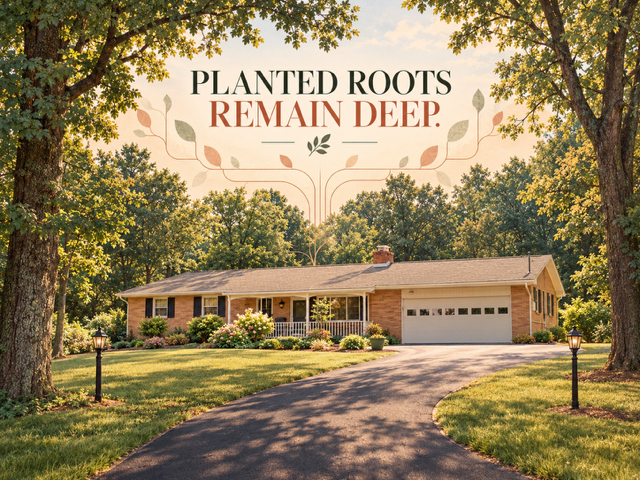
A family story carried forward
Dale C. Ritter died on September 16, 2020, aged eighty-four.
His lifetime began as the youngest of ten children and included the brother he lost, the marriage he shared with Nancy, thirty years at Mack Trucks, and the house that became part of the family's memory. Behind him stood far older generations: people whose names appear in the records of farms, trades, congregations and Pennsylvania towns.
Dale's family story reaches into an earlier American world, with its own migrations, losses and reinventions. The generations before him lived through the transformation of Pennsylvania from colonial farms and small congregations to bustling railroad towns and industrial workplaces. He carried that long history into a life he built with Nancy.
Those places mattered, but they were not all that Dale left behind. His grandchildren could remember the man who took them fishing in the Lehigh River, fed a rescued squirrel named Oscar, and restored antique clocks with astonishing ease. The family history is large; the life they knew was particular.
Now Nancy's history and Dale's can be read beside one another: two different journeys through the same region, joining in one family.