A family story · Pennsylvania
Nancy
Ritter
1936 —
A life rooted in the Lehigh Valley, shaped by journeys that began much farther away.
Begin her story ↓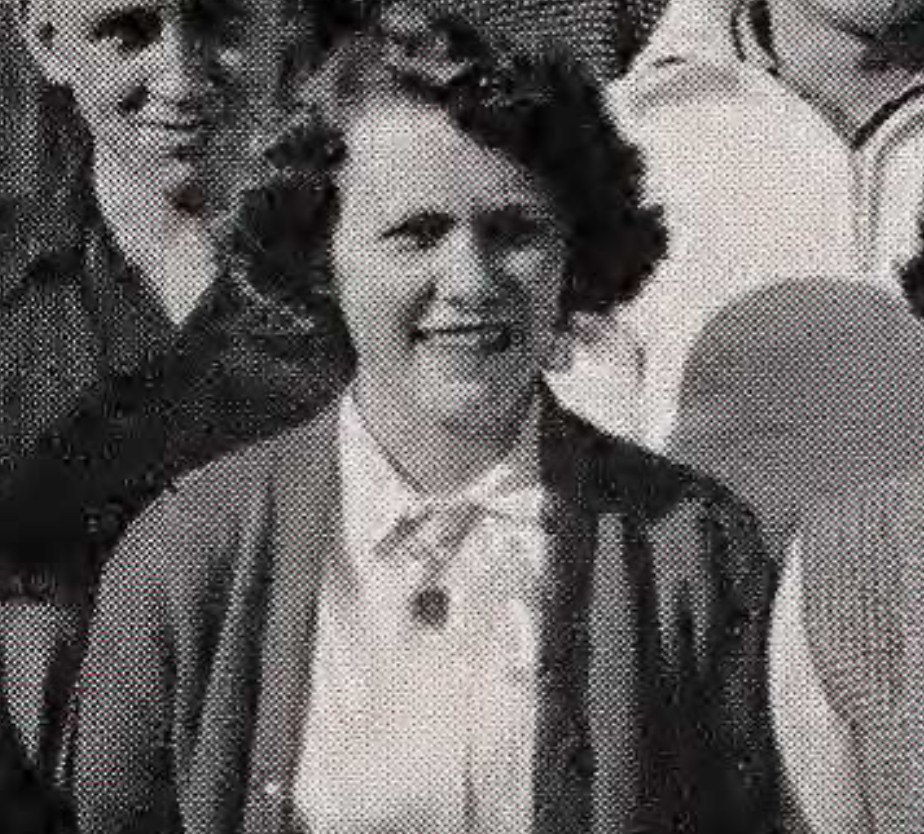
October 6, 1936 · Allentown, Pennsylvania
Nancy
is born.
Mother · Anna “Gerda” Dwornak
Father · John Stephen “Sambo” Kovish Jr.
Eldest of seven children
Nancy Kovich Ritter was born on October 6, 1936, in Allentown, Pennsylvania. Her parents, John Stephen “Sambo” Kovish Jr. and Anna “Gerda” Dwornak, had both been born in Pennsylvania. But when Nancy arrived, her family was still only one generation removed from Europe.
Her father’s family—the Kovish, Palencar and Ulicny families—came from what is now eastern Slovakia. Her mother’s family—the Dwornak and Mruk families—came from Galicia, in villages that are now in western Ukraine.
Nancy would grow up in Emmaus as the eldest of seven children.
Family evidence · 1936
Three months before Nancy was born.
John “Sambo” Kovish and Anna “Gerda” Dwornak married on July 11, 1936. Their marriage joined the Slovak-American Kovish/Palencar world of Emmaus with the Galician Dwornak/Mruk family of Allentown. Examine their marriage record and family connections ↗
The family we meet here was already the result of two very different migration stories. The rest of the story begins by understanding where Nancy’s parents—and their parents—came from.
02
Emmaus · 1940
The first household snapshot.
The 1940 census gives us an early documentary snapshot of the young Kovish household at 407 Seventh Street in Emmaus.
Nancy was three. Sally—recorded as “Sallie”—was two, and Joseph was still an infant. Terry, Jeanne and John had not yet arrived.
Her father, John “Sambo” Kovish, was working as a core maker in a pipe foundry. A core maker produced the sand forms used to create hollow spaces inside cast-metal pieces. It was the same foundry process in which Nancy’s grandfather had worked as a moulder and earlier Palencar relatives had worked at Donaldson Iron.
The 1940 census brings the young family together at 407 Seventh Street: Nancy and her younger siblings, their parents, and the foundry work supporting the household.
Beyond the census: John and Gerda.
The 1940 record captures a moment in their young married life, but it is not the whole of their story. John “Sambo” Kovish later served twenty years in the U.S. Army, retiring as a master sergeant. His 1981 obituary records the military career that followed his early foundry work.
Her mother · Anna “Gerda”
Gerda's own working life continued for decades. Her obituary records twenty-five years as a sewing-machine operator at the former Emmaus Shirt Company, and her membership in St. Mary’s Ukrainian Orthodox Church in Allentown.
The occupational continuity is unusually strong: immigrant laborers and moulders were followed by a molding-shop foreman, then a core maker. Nancy grew up inside the industrial economy that had drawn earlier generations to Pennsylvania.
Before Nancy
Where her family came from.
These were not simply different towns in the same country. Nancy’s two sides came from different parts of the old Austro-Hungarian Empire and somewhat different cultural worlds. What united them later was Pennsylvania: relatives already here, industrial work, churches, railroads, foundries, and the small cities and towns of the Lehigh Valley.
Her father’s family
Kovish · Palencar · Ulicny
Eastern Slovakia, then part of the Kingdom of Hungary within Austria-Hungary. Rural villages near the Prešov and Humenné regions eventually gave way to an immigrant world centered on Emmaus.
Koškovce / Prešov region → Emmaus
Her mother’s family
Dwornak · Mruk
Galicia and Lodomeria, a large Austrian province stretching across what is now southeastern Poland and western Ukraine. The villages of Skoryki and Juszkowce sat in an overwhelmingly rural and poor region.
Skoryki / Juszkowce → Pennsylvania
A note about names and countries
The people stayed the same.
There was no independent Slovakia when these ancestors were born, and no independent Ukraine. A person might be described as Austrian, Hungarian, Slovak, Galician, Polish, Ruthenian or Ukrainian without necessarily moving anywhere.
Names shifted too: Palentsár became Palencar; Uličný appears as Ulicny or Ulicne; Wasyl Dwornik became Basil or Charles Dwornak; Zosia became Sophie; and Kovish appears at times as Kovich or similar spellings. Languages, officials, borders and American spellings changed around the same people.
Her father’s side
Eastern Slovakia to Emmaus.
Stephen Palencar and the beginning of an immigrant community
One of Nancy’s earliest clearly identifiable paternal ancestors in America was Stephen Palencar Sr. A church record that closely matches Stephen identifies a Stephanus Palentsár, born in 1859 in the Prešov region, son of Andreas Palentsár and Elisabetha Rumann. Other family records connect the Ulicny and Kovish branches with Koškovce, farther east near Humenné.
This part of Slovakia was overwhelmingly rural. Beginning in the 1870s, eastern Slovakia became a major source of emigration from the Kingdom of Hungary. Crop failures, scarce farmland, limited industrial employment and political pressure all contributed. Nearly half a million Slovaks came to the United States between 1899 and 1915 alone, many entering the industrial Northeast.
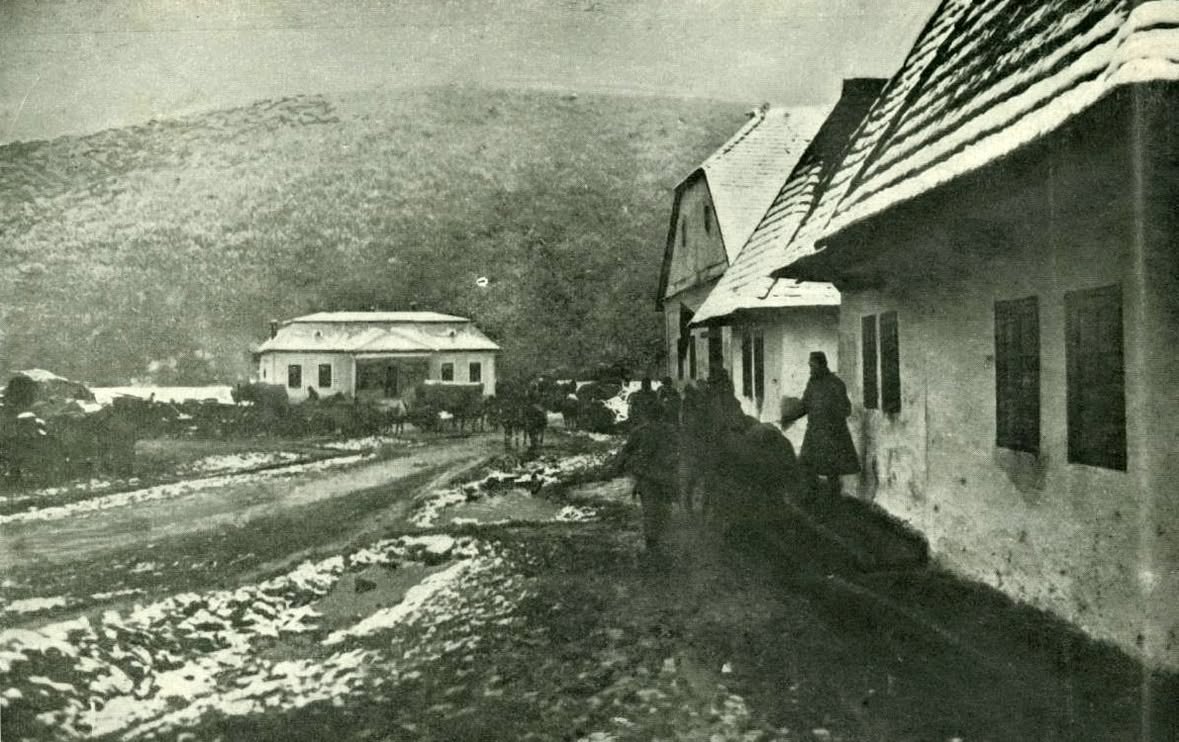
Eastern Slovakia · Village life
Life in the Carpathian villages.
Village roads, low houses, fields and forest were part of the rural Carpathian landscape the Kovish, Palencar and Ulicny families came from. Farming, family and village life shaped the rhythm of the region.
Farmland was scarce, industrial employment was limited, and mass emigration accelerated in the decades when this family began leaving.
Stephen seems to have been at the very beginning of that movement in Emmaus. When he died in 1934, a local newspaper described him as “the first Slovak to make his home in Emmaus.” It also reported that he had worked for the Donaldson Iron Company for forty-five years—placing his arrival in the industrial life of Emmaus around the late 1880s.
An immigrant family takes root in Emmaus
Stephen married Maria Ulicny, herself an immigrant from the eastern Slovak lands. By 1910, the census shows Stephen, Maria and their children living on Furnace Street in Emmaus. Their daughter Mary, Nancy’s future grandmother, was sixteen.
Their surroundings matter. The census pages contain numerous other Slovak-born residents, including laborers and boarders. Furnace Street was part of the working-class landscape of an industrializing town—not an isolated immigrant household in an otherwise unrelated community.
Donaldson Iron
Donaldson Iron had been formed in Emmaus in 1883 by John and George Donaldson. It specialized in cast-iron pipe for expanding American water and gas systems. At its height, Donaldson owned roughly 71 acres, employed about 700 workers and produced approximately 50,000 tons of cast iron annually, making it the largest employer in Emmaus. It remained in operation until 1943.
Stephen was a laborer there. His son, Stephen G. Palencar Jr., later became a foreman in Donaldson’s molding shop. Foundry work would appear again in the next generations.
Family place · Donaldson Iron
The plant where Stephen worked.
Industrial buildings, smokestacks, railway tracks and a large group of workers fill this photograph of the Donaldson Iron plant in Emmaus.
Stephen Palencar worked at Donaldson for decades. His son Stephen Jr. later became a foreman in its molding shop. It was a workplace shared by generations of the family.
639 Furnace Street
Over time, the family’s address becomes remarkably specific: 639 Furnace Street. Stephen Jr. listed it as his home when he married in 1926. Stephen Sr.’s 1934 death certificate gives 639 Furnace Street as his residence and Donaldson Iron as his employer. His funeral began at the family home before proceeding to St. Ann’s Catholic Church.
Maria remained at 639 Furnace Street after his death. When she died in 1942, her obituary again identified it as her home and named her as Maria S. Palencar, née Ulicne. Among her surviving daughters was “Mrs. John Kovish.” That was Nancy’s grandmother Mary.
Her obituary also counted 20 grandchildren and eight great-grandchildren. Nancy, born in 1936, was part of that youngest generation. Maria lived to see the family's immigrant beginnings grow into an extended family in Pennsylvania.
Furnace Street connects names that can otherwise look like unrelated branches on a family tree: Ulicny → Palencar → Kovish. Later records disagree between 638 and 639 Furnace Street, but the continuity of this small part of Emmaus is clear.
Church was part of the neighborhood too
St. Ann’s was not incidental. As immigration increased around 1900, a priest from St. John the Baptist Slovak Catholic Church in Allentown began traveling to Emmaus to celebrate Mass for the local Catholic population. By 1921, the Emmaus congregation was formally operating as a mission of that Slovak parish. A permanent church followed, and St. Ann’s became an independent parish in 1931.
Stephen and Maria’s funerals were connected with St. Ann’s, and their son Stephen remained a member decades later. For this branch, a fairly complete immigrant world emerges: home on Furnace Street, work at Donaldson Iron, church at St. Ann’s.
Original family records · Furnace Street
A home remembered in two obituaries.
Stephen’s 1934 newspaper notice names the Donaldson Iron Company and calls him the first Slovak resident of Emmaus. Maria’s 1942 notice brings us back to the same address—639 Furnace Street—and names their daughter Mrs. John Kovish, Nancy's grandmother.
Family place · St. Ann’s Church
Their church in Emmaus.
This postcard shows St. Ann’s, a place named directly in the Palencar family record. Stephen and Maria’s funeral accounts connect them to the parish, and their son Stephen remained a member.
Alongside Furnace Street and Donaldson Iron, the church helps us see the places that gave this immigrant family a local community—not just a sequence of names and dates.
Mary Palencar and John Kovish
Stephen and Maria’s daughter Mary Elizabeth Palencar was born in Emmaus in 1894. She grew up in the Furnace Street household and went to work young. Records describe her at different times in textile work—as a stripper, seamstress and later doing top hemming.
In 1914, she married John Kovish Sr. John’s path to Emmaus had been different. He was born in Koškovce in 1890 and came to America around 1908, apparently still in his teens. Records describe him as a laborer and later a moulder.
A moulder prepared forms into which molten metal could be poured. It was hot, dirty, physically demanding work requiring practical skill and constant proximity to furnaces, sand, heavy castings and molten iron.
John and Mary raised a large family in Emmaus. Their son John Stephen “Sambo” Kovish Jr., born in 1916, would become Nancy’s father. By 1940 he was working as a core maker—the foundry worker responsible for making the sand cores used to create hollow spaces inside castings.
Laborer → moulder → molding-shop foreman → core maker
The iron industry was not background scenery to this family. It was part of how several generations made their living.
Her mother’s side
Galicia to Pennsylvania.
A second family story
Nancy’s mother’s family came from much farther east. Her maternal grandfather was born Wasyl Dwornik in 1893 in Skoryki, Galicia. Her maternal grandmother was born Zosia Mruk in Juszkowce, also in Galicia. Today both places are in Ukraine.
The Galicia they knew was an overwhelmingly rural province of Austria-Hungary and one of the poorest parts of Central Europe. Around the turn of the twentieth century, population pressure had divided agricultural land into increasingly small holdings. Eastern Galicia had little industry capable of absorbing the surplus rural population, and hundreds of thousands relied on seasonal labor or left altogether.
The village Zosia came from
Zosia’s home village appears in different records as Juszkowce, Juczkovie, Juszkiwci and related spellings. Today it is Yushkivtsi, Ukraine. An 1880 description gives us a surprisingly detailed picture of the village only about fifteen years before Zosia was born.
It had 387 people in the village and another 24 on the manor estate. The settlement lay along a small stream, surrounded by fields, meadows, pastures and forest. Most inhabitants were Greek Catholic—360 people—while only 15 were Roman Catholic. There was a village church and a communal lending fund.
This was not an urban world. It was a small agricultural village of a few hundred people. Zosia’s immigration record identifies her not as Polish or Austrian, but as Ruthenian — Russniak. “Ruthenian” was the contemporary term commonly applied to the East Slavic population of Galicia from which modern Ukrainian and Rusyn identities developed.

Galicia · Village life
Village life in Galicia.
Pidvysoke was another village in Halychyna—historical Galicia—photographed in the early twentieth century. Its village houses, roads and surrounding land bring the region’s rural landscape into view.
An 1880 description of Zosia’s village records only a few hundred residents, a settlement along a stream, and a landscape of fields, meadows, pastures and forest. Most residents were Greek Catholic, and the village had a church and a communal lending fund.
Historical Galicia image · public-domain source on Wikimedia Commons ↗Wasyl leaves first
On December 10, 1910, seventeen-year-old Wasyl Dwornik left Hamburg aboard the Amerika. The German passenger record describes him as Galician and gives his occupation as Landmann, Tagelöhner—essentially a rural or agricultural worker and day laborer.
His accommodation was Zwischendeck, the inexpensive between-decks or steerage accommodation used by working-class emigrants. The ship traveled through Cuxhaven, Southampton and Cherbourg before reaching New York on December 20.
Wasyl arrived with $20. His father, Wawryk Dwornik, remained in Skoryki. But Wasyl was not arriving without a destination: he was headed to Northampton, Pennsylvania, where his brother Josef Dwornik was already living.
Zosia follows another family network
Four years later, Zosia made a remarkably similar journey. She left through Bremen aboard the Grosser Kurfürst and arrived in New York on June 3, 1914. She carried $10. Her father, recorded as Fras. Mruk, remained behind in Juczkovie.
Her destination was Bangor, Pennsylvania. Waiting there was her sister.
Wasyl followed his brother. Zosia followed her sister. Neither simply stepped off a ship and chose the Lehigh Valley by chance. Eastern Pennsylvania already contained the beginnings of the family network they needed.
And then Europe changed almost immediately
Zosia arrived on June 3, 1914. Twenty-five days later, Archduke Franz Ferdinand was assassinated. Within weeks, Austria-Hungary was at war, and eastern Galicia became a major theater of fighting between the Austro-Hungarian and Russian armies.
Back in Galicia, the world Zosia had left behind was changing almost as soon as she reached America.
The Russian army invaded Galicia in 1914. Austria-Hungary collapsed in 1918. Zosia’s village subsequently became part of Poland. In 1939 the Soviet Union occupied eastern Galicia. German forces took the region in 1941. The Soviets returned in 1944. After World War II the village became part of the Ukrainian Soviet Republic, and in 1991 it became part of independent Ukraine.
Nearby Bibrka suffered especially terribly during the German occupation; its Jewish community was confined, deported and ultimately destroyed. So the country Zosia left in 1914 disappeared only four years after she left. The village survived. The borders around it did not.
Skoryki, the village Wasyl had left in 1910, went through a comparable sequence: Austrian Galicia → interwar Poland → Soviet occupation → German occupation → Soviet Ukraine → independent Ukraine.
Charles and Sophie in Pennsylvania
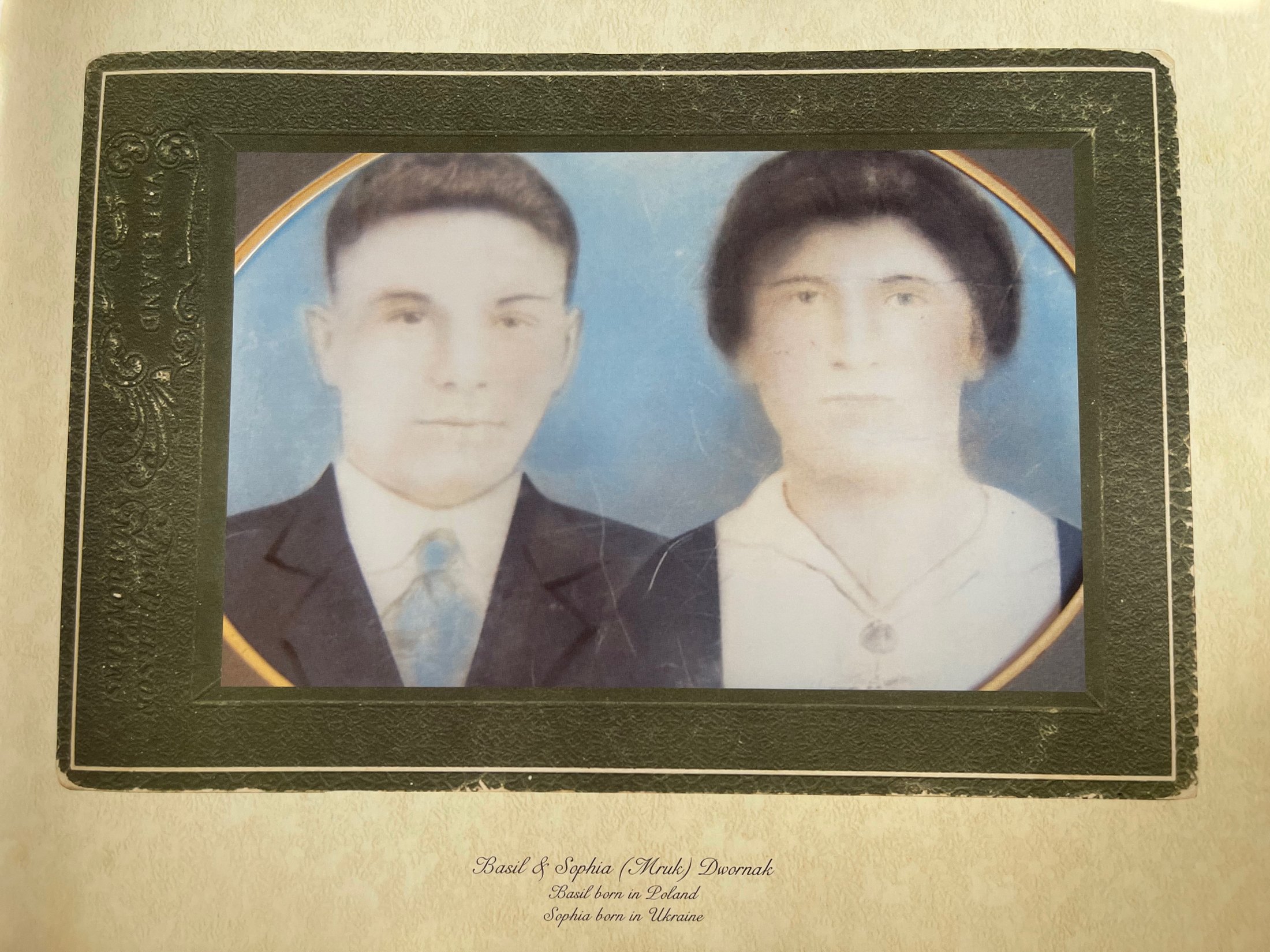
In America, Wasyl became known variously as Basil and Charles Dwornak. Zosia became Sophie. They married in Allentown on May 25, 1918, with records connecting them to 618 Front Street.
Their first daughter, Anna “Gerda” Dwornak, was born in 1919. Olga followed in 1920, Stephania in 1921, and Joseph in 1923.
Charles eventually built a long working life in Pennsylvania. His obituary says he worked for the Lehigh Valley Railroad before retiring in 1960. It also identifies him as a member of St. Mary’s Ukrainian Orthodox Church in Allentown.
Census records give this grandfather a more particular working life: an electric-light lineman in 1930, a stationary engineer at a power-and-light company in 1940, and a trucker connected with a filling station in 1950. These are recorded occupations at particular dates, not a fully reconciled account of how his employers and duties changed. Read Basil and Sophie's story ↗
Family record · 1967
Basil Dwornak’s obituary.
It names Sophie (Mruk) Dwornak and their children—including Anna, Nancy's mother—and gives the railroad and parish details in the family's own contemporary record.

Allentown · Lehigh Valley Railroad
The railroad was part of the city around them.
By 1916, two years before Charles and Sophie married there, the railroad station and tracks were prominent features of Allentown’s industrial landscape.
Charles worked for the Lehigh Valley Railroad for many years before retiring in 1960, bringing the railroad into the family’s own working history.
Public-domain image · Wikimedia Commons ↗The young man recorded in Hamburg simply as Galician was called Polish in one American record, born in Austria in another, and Ukrainian later in life. Those labels reflect the history of the place he came from as much as they reflect Charles himself.
The family in one generation
Europe became family memory remarkably fast.
When the records are placed side by side, the transformation is striking. Nancy was not generations removed from immigration. The people who crossed the Atlantic were her grandparents and great-grandparents.
Her father's family · Eastern Slovakia
Immigrant great-grandparents
Stephen Palencar & Maria Ulicny
Furnace Street · Emmaus
Grandparents
Mary Palencar & John Kovish Sr.
Mary was Stephen and Maria’s daughter; John came from Koškovce.
Father
John Stephen “Sambo” Kovish Jr.
Born in Emmaus · 1916
Her mother's family · Galicia
Immigrant grandparents
Wasyl (Basil) Dwornik & Zosia (Sophie) Mruk
Skoryki + Juszkowce → Pennsylvania
Their daughter · Nancy's mother
Anna “Gerda” Dwornak
Born in Allentown · 1919
Her parents · married July 1936
John “Sambo” Kovish & Anna “Gerda” Dwornak
Two Pennsylvania-born children of immigrant families
October 6, 1936 · Allentown
Nancy Kovish
Eldest of seven children
Married 1955 · the next generation
Nancy & Dale Ritter
Their family continued in the Lehigh Valley.
26years from Wasyl’s arrival to Nancy’s birth
22years from Zosia’s arrival to Nancy’s birth
What feels like distant European history now was the lived experience of Nancy’s grandparents.
Pennsylvania · 1936
The two families meet.
By the 1930s, these separate histories had produced two Pennsylvania-born young adults.
John “Sambo” Kovish Jr. had grown up in the Slovak-American industrial community of Emmaus. Anna “Gerda” Dwornak had grown up in the Galician immigrant family of Charles and Sophie.
John and Anna married in July 1936. Nancy was born three months later, on October 6. That marriage joined the two sides of the story.
On her father’s side, Nancy inherited the history of Koškovce, Široké, Furnace Street, Donaldson Iron and the Slovak community of Emmaus. On her mother’s side were Skoryki, Juszkowce, Galicia, the railroad, Ruthenian migration and the family networks that led first to Northampton and Bangor.
Her father's family
Eastern Slovakia
Koškovce · Široké → Emmaus
John “Sambo” Kovish Jr.
Her mother's family
Galicia
Skoryki · Juszkowce → Pennsylvania
Anna “Gerda” Dwornak
July 1936 · Pennsylvania
John & Anna marry
October 6, 1936
Nancy Kovish
Emmaus · 1940s–1950s
Growing up in Emmaus.
Nancy grew up with Sally, Joseph, Terry, Jeanne and John. Her father worked as a core maker. Her mother later appears in the census as a sewing-machine operator. Even though Nancy had been born in America, the industrial economy that had drawn earlier generations to Pennsylvania remained part of her own life.
By the early 1950s, Nancy was attending Emmaus High School. Her 1953 yearbook places her in the school’s General and Industrial program.
Other pages provide a more personal glimpse. Nancy was a member of the Girls’ Glee Club, which performed in the school’s Christmas assembly, operetta and spring concert. She also appears in the Mixed Junior Glee Club, whose members studied music, practiced harmony and performed together.
An earlier yearbook also lists Kovish among the students participating in the freshman production “Cut the Comedy.” Music and school performances were part of Nancy’s high-school years alongside the practical preparation of the General and Industrial program.
Place context · the school she knew
Nancy’s early-1950s school years were spent in the older Jefferson Building on North Street, the high school’s home from 1915 until the new Macungie Avenue campus opened in 1955. The modern campus is therefore not the building represented by her 1952–53 yearbook experience.
Yearbook archive
1952 — 1953
1952 — 1953
1955
Emmaus · Allentown · Macungie
Nancy & Dale
A young family begins.
By the summer of 1955, Nancy was eighteen and had begun working. A Morning Call marriage-license notice identified her as Nancy Kavish of Elm Street in Emmaus and described her occupation as factory worker. “Kavish” was another variation of the family surname.
Dale C. Ritter had grown up in the same region. He was born June 1, 1936, in Macungie, only a few months before Nancy. He was the son of William H. Ritter and Mary Ann Bilger Ritter and the youngest of a large family of ten children whose roots were also in the Lehigh Valley.
By July 1955, Dale was nineteen and living in Allentown. The same marriage-license notice described him as an automotive employee.
Nancy and Dale married in 1955, when both were still teenagers. Their marriage brought together two families already deeply established in the same cluster of Pennsylvania communities: Emmaus, Allentown, Macungie, Center Valley, Coopersburg and the surrounding townships.
Dale’s working life eventually became closely associated with another major Lehigh Valley employer. He spent thirty years working for Mack Trucks before retiring. The employers changed—from Donaldson Iron and the Lehigh Valley Railroad to modern manufacturing—but work in large industrial enterprises remained part of the family’s economic life.
Dale, before their wedding. A small yearbook portrait puts a face to the young man from Macungie Nancy married in 1955.

Lehigh Valley · Manufacturing
A different industry, the same regional pattern.
The Mack assembly plants stretched across Allentown during the era of Dale’s working life. The scale of the factories helps explain the industrial world behind his thirty years at Mack Trucks.
Across the family story, the employers change—Donaldson Iron, the Lehigh Valley Railroad, Mack Trucks—but industrial employment remains a thread connecting generations.
Public-domain image · Wikimedia Commons ↗A family measured in addresses
A family takes root.
Around 1973, Nancy and Dale moved into their long-term home in Upper Saucon Township. By then, nearly a century had passed since Stephen Palencar had begun establishing the family in Emmaus.
The first generations moved because migration required it: from villages in eastern Slovakia and Galicia to Atlantic ports, from New York into Pennsylvania, and then among industrial communities where work and relatives could be found. Nancy and Dale’s generation was different. They could stay.
c. 1910s–40sFurnace StreetEmmaus
→
1940Seventh StreetEmmaus
→
1955Elm StreetEmmaus
→
1970s onwardGlen RoadUpper Saucon
What those addresses mean
Earlier generations had Furnace Street. Nancy’s childhood included Seventh Street and Elm Street. Nancy and Dale had Glen Road. The addresses trace a change easy to miss in a family tree: Furnace Street belonged to a generation establishing itself in America. Seventh and Elm belonged to their Pennsylvania-born descendants. Glen Road became the home of a family that no longer needed to migrate in order to establish itself.
Nancy & Dale’s family
The family that followed.
Nancy and Dale had a daughter, Mary Ann. Over the following decades their family grew again.
By the time of Dale’s death in 2020, the obituary described the family across multiple generations. He died on September 16, 2020, at the age of eighty-four, after approximately sixty-five years of marriage.
The life Nancy and Dale built together remained centered in the same region where Nancy’s immigrant grandparents had first established themselves generations earlier.
Then Furnace Street immigrant foothold
Home, foundry work and parish life built a durable family world in Emmaus.
Later Glen Road permanence
A long-term family home became one of the places connecting the documented past to the present.
From immigration to permanence
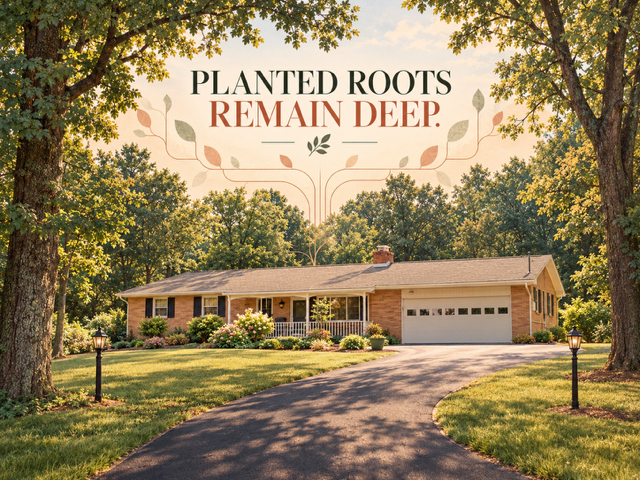
Planted roots remain deep.
Nancy’s life brings those older journeys into familiar places.
Stephen Palencar and Maria Ulicny came to Pennsylvania as immigrants. John Kovish crossed the Atlantic from Koškovce as a young man. Wasyl Dwornik traveled steerage from Galicia with twenty dollars and a brother waiting in Pennsylvania. Zosia Mruk followed her sister from a village of only a few hundred people.
Their children became Pennsylvanians. Nancy’s generation grew up as Pennsylvanians.
Her childhood was not defined by an ocean crossing or changing European borders. It was defined by Emmaus streets, brothers and sisters, high school, glee clubs, factory work and a young man from nearby Macungie.
She and Dale then spent most of their adult lives only a short distance from the places where those immigrant families had first settled.
In that sense, the story does not end when Nancy is born in 1936. Her life shows the result of everything that came before it.
Those earlier generations came for different reasons, and we cannot know everything they hoped to find. What the records do show is where their families settled—and how the ordinary life Nancy and Dale built on Glen Road became another chapter in that history.